Diverticulitis
Diverticulitis is inflammation of colonic diverticula (outpouchings of the intestinal wall), affecting approximately 180 per 100,000 people annually in the US and resulting in about 200,000 hospitalizations per year. [1-2]
Clinical Presentation
Patients typically present with left lower quadrant pain associated with nausea, vomiting, fever, and leukocytosis. [1] Rectal bleeding is not commonly seen in acute diverticulitis. [3] Approximately 85% of cases are uncomplicated (localized inflammation without abscess, perforation, fistula, or obstruction), while 12-15% are complicated. [1][3]
Diagnosis
Contrast-enhanced CT scan of the abdomen and pelvis is the recommended diagnostic test, with sensitivity of 98-99% and specificity of 99-100%. [1] Abdominal ultrasound may also be used, particularly in the emergency department. [2] Clinical diagnosis alone is only accurate in 40-65% of patients, making imaging essential for confirmation. [3]
Management
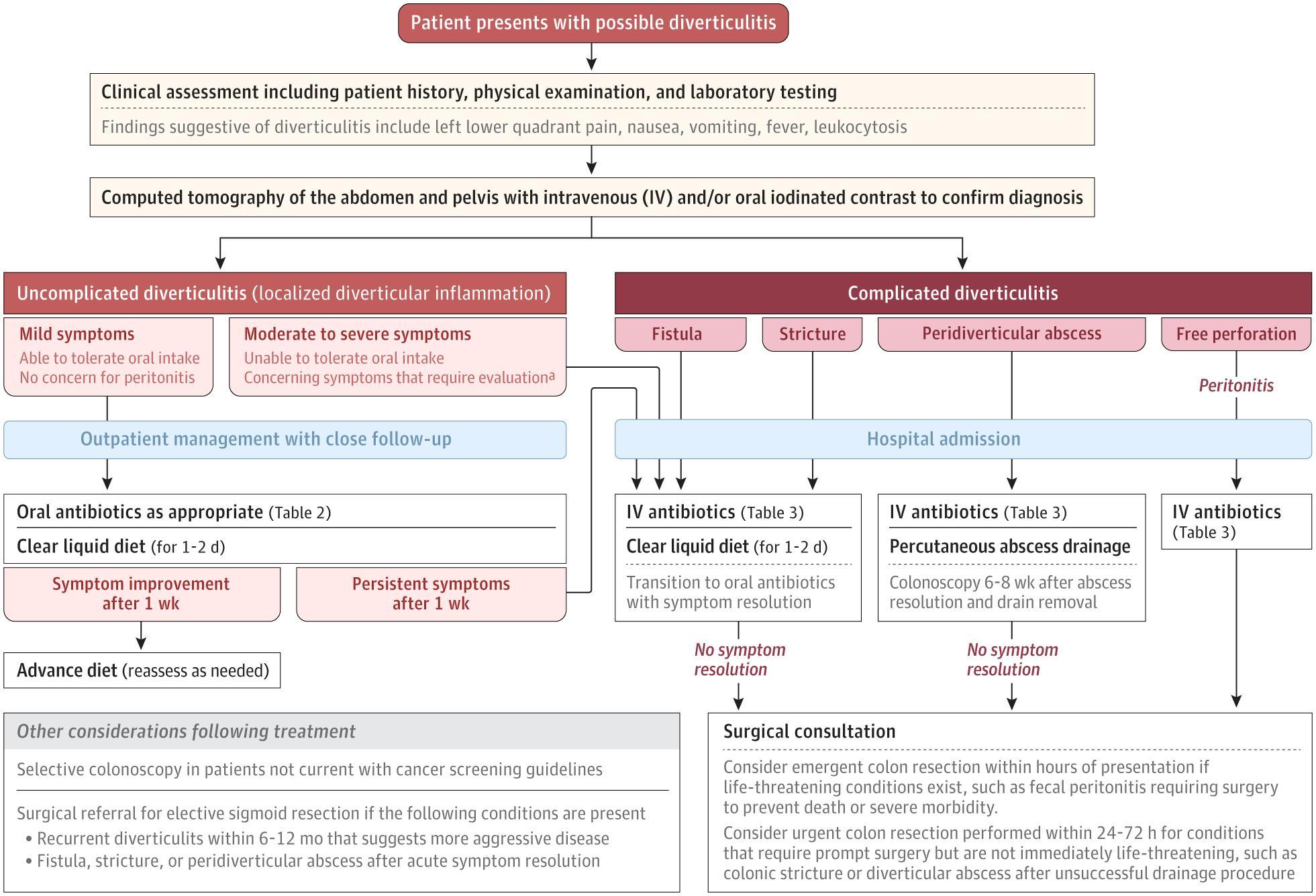
The following algorithm illustrates the comprehensive approach to diverticulitis management:
Uncomplicated Diverticulitis
- First-line therapy: Observation with pain management (typically acetaminophen) and dietary modification (clear liquid diet for 1-2 days) [1-2]
- Selective antibiotic use is recommended for patients with: [1][4-5]
- Persistent fever or systemic symptoms
- Age >80 years
- Pregnancy
- Immunocompromise (chemotherapy, high-dose steroids, organ transplant)
- Chronic medical conditions (cirrhosis, chronic kidney disease, heart failure, poorly controlled diabetes)
- High-risk features: CRP >140 mg/L, WBC >15 × 10⁹/L, symptoms >5 days, vomiting, or CT findings of fluid collection or longer inflamed segment
- Outpatient oral antibiotics (7-10 days): [1][6]
- Amoxicillin-clavulanate 875 mg twice daily, OR
- Ciprofloxacin 500 mg twice daily plus metronidazole 500 mg three times daily, OR
- Cephalexin plus metronidazole
- Inpatient management indicated for high fever (>101.5°F), leukocytosis, complicated disease, immunosuppression, serious comorbidities, or inability to tolerate oral intake [6]
Complicated Diverticulitis
- Intravenous antibiotics: [1]
- Ceftriaxone plus metronidazole, OR
- Piperacillin-tazobactam, OR
- Ampicillin-sulbactam
- Percutaneous drainage for abscesses ≥3-5 cm [7-8]
- Emergent surgery (colonic resection) for generalized peritonitis or failure of non-operative management [1][7]
Follow-up
Colonoscopy is recommended 6-8 weeks after diagnosis to exclude colon malignancy, particularly in complicated diverticulitis (6-8% CRC risk) or when suspicious features are present on CT. [3][7-8]
Risk Factors
Age >65 years, obesity (BMI ≥30), genetic factors (TNFSF15 gene variants), connective tissue disorders, NSAID/opioid/steroid use, hypertension, and type 2 diabetes. [1]
References
1. Diverticulitis. — Brown RF, Lopez K, Smith CB, Charles A. The Journal of the American Medical Association. 2025.
2. What Is Diverticulitis?. — Narayanan S, Jackson CD. The Journal of the American Medical Association. 2025.
3. Colorectal Cancer Screening and Surveillance and Other Colon Conditions in the Older Adult. — Calderwood AH, Shaukat A. The American Journal of Gastroenterology. 2025.
4. AGA Clinical Practice Update on Medical Management of Colonic Diverticulitis: Expert Review. — Peery AF, Shaukat A, Strate LL. Gastroenterology. 2021.
5. Diagnosis and Management of Acute Left-Sided Colonic Diverticulitis: A Clinical Guideline From the American College of Physicians. — Qaseem A, Etxeandia-Ikobaltzeta I, Lin JS, et al. Annals of Internal Medicine. 2022.
6. Diverticulitis. — Young-Fadok TM. The New England Journal of Medicine. 2018.
7. The Management of Diverticulitis: A Review of the Guidelines. — You H, Sweeny A, Cooper ML, Von Papen M, Innes J. The Medical Journal of Australia. 2019.
8. Management of Colonic Diverticulitis. — Peery AF. BMJ. 2021.
Figure
More from Deep Dive
Reviewed by Dr. Lucas Mastropaolo. SymptomDx is an educational tool for medical professionals — it does not replace clinical judgment. Verify all clinical data and drug dosages with authoritative sources.