Failure to Cope (Social)
"Failure to cope" (also termed "failure to thrive" in adults, or "social admission") is a non-specific clinical label applied predominantly to older adults presenting to the ED when they can no longer manage independently at home due to a combination of functional decline, loss of social supports, cognitive impairment, and/or unrecognized medical illness. Critically, 88% of patients admitted under this label are ultimately found to have an acute medical diagnosis at discharge, making thorough medical evaluation essential. [1]
History
- Functional baseline: What could the patient do independently 2 weeks ago vs. now? Assess ADLs (bathing, dressing, toileting, feeding, transferring) and IADLs (cooking, medications, finances, shopping, transportation) [2-3]
- Onset and trajectory: Acute (hours–days) vs. subacute (weeks) decline — acute onset suggests medical precipitant (infection, stroke, medication change, fall)
- Precipitating event: Recent fall, illness, hospitalization, medication change, loss of caregiver, bereavement, change in living situation
- Nutritional intake: Appetite changes, weight loss (>5% in 1 month or >10% in 6 months is significant), ability to prepare/access food [4-5]
- Medication adherence: Missed doses, confusion about regimen, recent additions/changes, polypharmacy (≥5 medications) [2]
- Mood and cognition: Screening for depression (PHQ-2), memory complaints, confusion, sleep disturbance
- Social supports: Who lives with the patient? Caregiver availability and burden? Recent loss of spouse/caregiver? Financial constraints? [6]
- Important negatives: Chest pain, dyspnea, fever, focal weakness, urinary symptoms, abdominal pain, suicidal ideation
Alarm Features
- Acute altered mental status or new confusion → delirium workup (infection, metabolic, medication, stroke) [7]
- New focal neurological deficits → stroke
- Fever or hypothermia → sepsis, UTI, pneumonia
- Signs of trauma inconsistent with history → elder abuse/neglect [8]
- Severe malnutrition, pressure ulcers, contractures → neglect (self or caregiver) [9]
- Suicidal ideation — elderly patients have the highest completed suicide rate
- Inability to ambulate or new immobility → fracture, spinal cord pathology, severe deconditioning
- Medication toxicity signs (bradycardia, hypotension, altered sensorium)
Medications
- Contributors to functional decline and falls: [10-12]
- Benzodiazepines, sedative-hypnotics (OR for falls ~2.05)
- Antipsychotics (OR ~2.30)
- Opioids (OR ~1.60)
- Anticholinergics (diphenhydramine, oxybutynin, TCAs)
- Loop diuretics (OR ~1.36–1.58)
- Antihypertensives (especially at initiation/dose change)
- Gabapentinoids, anticonvulsants
- SSRIs/SNRIs (OR ~1.48)
- Polypharmacy (≥5 medications): 21% higher fall rate; ≥10 medications: 50% higher [12]
- Medication review tools: AGS Beers Criteria, STOPPFall, Anticholinergic Burden Calculator [13]
- Common treatments to initiate (once medical causes addressed):
- Nutritional supplementation if malnourished
- Antidepressant if depression identified (prefer SSRI at lowest dose)
- Vitamin D supplementation for fall prevention
- Correct hypothyroidism, B12 deficiency, anemia [14]
- Contraindicated/avoid: New benzodiazepines, anticholinergics, unnecessary opioids
Diet
- Malnutrition prevalence: Up to 50% of acutely ill older adults in the ED meet GLIM criteria for malnutrition [15]
- Assessment: Mini Nutritional Assessment–Short Form (MNA-SF) is best validated; score <12 indicates risk [5]
- Key considerations:
- Ability to shop, prepare, and eat food independently
- Dental/denture problems causing dysphagia
- Financial barriers to food access (food insecurity)
- Meals on Wheels or congregate meal programs [4]
- Acute management: Oral nutritional supplements; avoid refeeding syndrome in severely malnourished
- Long-term: Dietitian referral, community food programs, address social isolation (most common social risk at 39%) [16]
Review of Systems
- Neuropsychiatric: Confusion, memory loss, depression, anxiety, sleep disturbance, hallucinations
- Constitutional: Weight loss, fatigue, anorexia, fever, night sweats
- Cardiovascular: Orthostasis, syncope, exertional dyspnea, edema
- Pulmonary: Cough, dyspnea
- GI: Dysphagia, abdominal pain, constipation, diarrhea, incontinence
- GU: Urinary frequency/urgency, incontinence, dysuria
- MSK: Joint pain, weakness, falls, gait instability
- Skin: Pressure injuries, rashes, poor hygiene
Collateral History and Family History
- Collateral is essential — contact family, caregivers, home health aides, neighbors, PCP [17-18]
- Baseline cognitive and functional status
- Timeline of decline
- Medication compliance
- Home environment safety
- Caregiver burden and fatigue (powerful predictor of institutionalization) [19]
- Family history: Dementia (Alzheimer's, frontotemporal), depression, Parkinson's disease, stroke
- Social context: Living alone (Z60.2), social isolation, financial hardship, recent bereavement, substance use
Risk Factors
- Age >75 years, especially >85 [20-21]
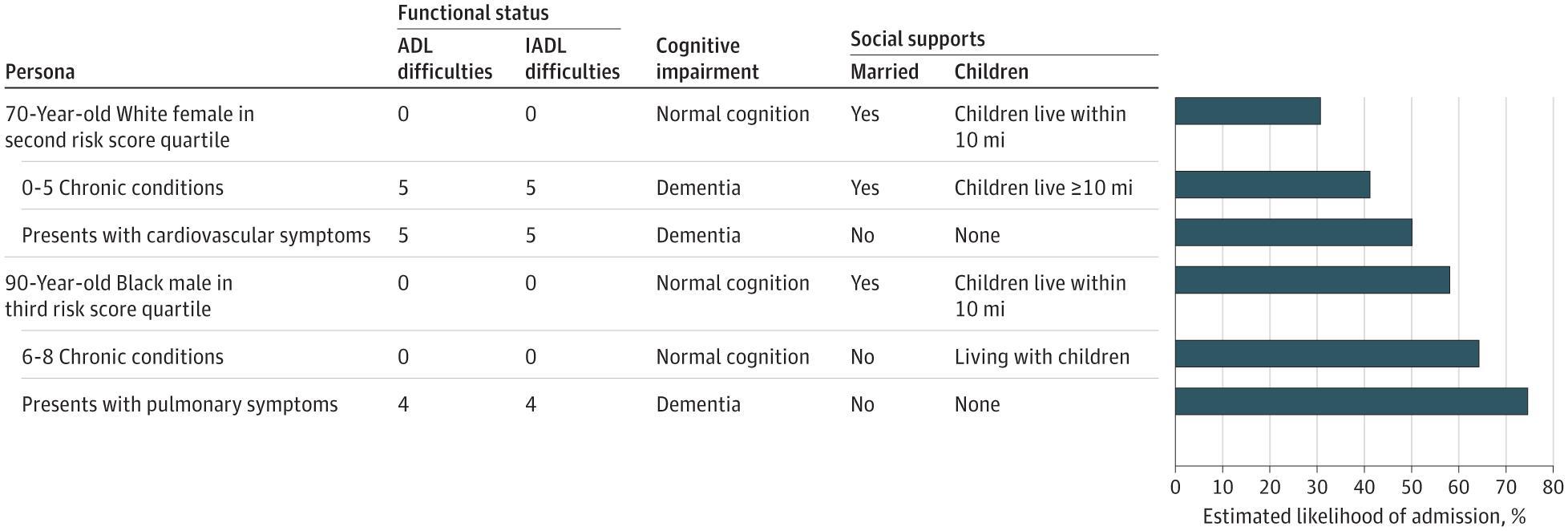
- Living alone without nearby family — children >10 miles away increases admission likelihood by 5 percentage points [6]
- Cognitive impairment/dementia — increases admission by 4.6 percentage points [6]
- Functional impairment — difficulty with 5 ADLs increases admission by 8.5 percentage points [6]
- Frailty (Clinical Frailty Scale ≥6) [14][22]
- Recent hospitalization or ED visit
- Polypharmacy
- Depression — leading cause of weight loss in long-term care [23]
- Caregiver loss or burnout [19]
- Low socioeconomic status, inadequate housing, food insecurity [16][24]
Differential Diagnosis
The label "failure to cope" should prompt a search for underlying medical causes — not serve as a final diagnosis.
- Infection: UTI, pneumonia, cellulitis (most common acute precipitant in elderly)
- Delirium: Medication-induced, metabolic, infectious — often superimposed on dementia [7]
- Depression: Major depressive disorder, adjustment disorder, grief
- Dementia progression: Alzheimer's, vascular, Lewy body, frontotemporal
- Medication toxicity/adverse effects: Overmedication, drug interactions, new prescriptions
- Metabolic: Hypothyroidism, hyperglycemia/hypoglycemia, hyponatremia, hypercalcemia, B12 deficiency, renal failure
- Malignancy: Occult GI, lung, hematologic (weight loss, anorexia, fatigue) [4]
- Cardiac: Heart failure exacerbation, arrhythmia, orthostatic hypotension
- Elder abuse/neglect: Physical, emotional, financial, or self-neglect [8][17]
- Stroke/TIA: Subtle presentations in elderly (confusion, falls, functional decline without classic focal signs)
- Pain: Undertreated chronic pain limiting mobility
- Substance use: Alcohol use disorder (often underrecognized in elderly)
Past Medical History
- Chronic diseases: CHF, COPD, CKD, diabetes, Parkinson's, arthritis — assess for decompensation [2]
- Cognitive diagnoses: Known dementia, MCI, prior delirium episodes
- Psychiatric history: Depression, anxiety, prior suicide attempts
- Surgical history: Recent procedures, hip/knee replacement, prior fractures
- Prior hospitalizations: Frequency, reasons, length of stay
- Baseline functional status: Prior level of independence, use of assistive devices, home services already in place
- Advance directives: Code status, healthcare proxy, goals of care documentation
Physical Exam
- Vital signs: Temperature (hypothermia in elderly sepsis), orthostatic BP (drop ≥20/10 mmHg), heart rate, SpO2, weight (compare to prior)
- General: Nutritional status, hygiene, clothing appropriateness, body habitus (BMI <22 in >70 years suggests malnutrition) [5]
- Cognitive screen: Brief cognitive assessment — Mini-Cog, 4AT (for delirium), Montreal Cognitive Assessment
- Mood: PHQ-2 or Geriatric Depression Scale
- Skin: Pressure ulcers (sacrum, heels), bruising pattern (abuse?), turgor, rashes
- MSK/Neuro: Gait assessment, Timed Up and Go test (>12 seconds = increased fall risk), grip strength, focal deficits, peripheral neuropathy [7]
- Focused exam maneuvers:
- Oral cavity (dentition, mucous membranes)
- Abdominal exam (masses, tenderness, distension)
- Cardiopulmonary (murmurs, crackles, JVD, edema)
- Rectal exam if GI symptoms or occult blood concern
Lab Studies
- Recommended initial labs: [2]
- CBC with differential
- BMP (electrolytes, glucose, BUN/creatinine)
- TSH
- Urinalysis
- Hepatic function panel
- Additional based on clinical suspicion:
- Vitamin B12, folate
- Calcium, phosphate, magnesium
- ESR/CRP (if infection or malignancy suspected)
- Prealbumin (though not a reliable nutritional marker per current evidence) [5]
- Blood cultures if febrile
- Drug levels (digoxin, phenytoin, lithium) if applicable
- Lactate if sepsis concern
- Toxicology screen if altered mental status
- Note: Serum albumin should not be used as a nutritional marker [5]
Imaging
- Chest X-ray: Low threshold — pneumonia, CHF, mass
- CT head without contrast: If new confusion, altered mental status, focal deficits, or fall with head strike
- Additional as indicated:
- CT abdomen/pelvis if abdominal complaints or concern for obstruction/mass
- Hip/pelvis X-ray if fall with pain or inability to ambulate
- Abdominal ultrasound if liver function abnormalities or abdominal mass
- When imaging is unnecessary: Stable chronic functional decline with no acute symptoms, no trauma, and normal exam
Special Tests
- Frailty screening: Clinical Frailty Scale (CFS) — score ≥6 indicates moderate-to-severe frailty [14][22]
- Functional assessment tools: ISAR (Identification of Seniors at Risk), TRST (Triage Risk Stratification Tool) [25]
- Cognitive screening: Mini-Cog (3-item recall + clock draw), 4AT (delirium screen), MMSE or MoCA
- Depression screening: PHQ-2/PHQ-9, Geriatric Depression Scale
- Nutritional screening: MNA-SF, GLIM criteria [5]
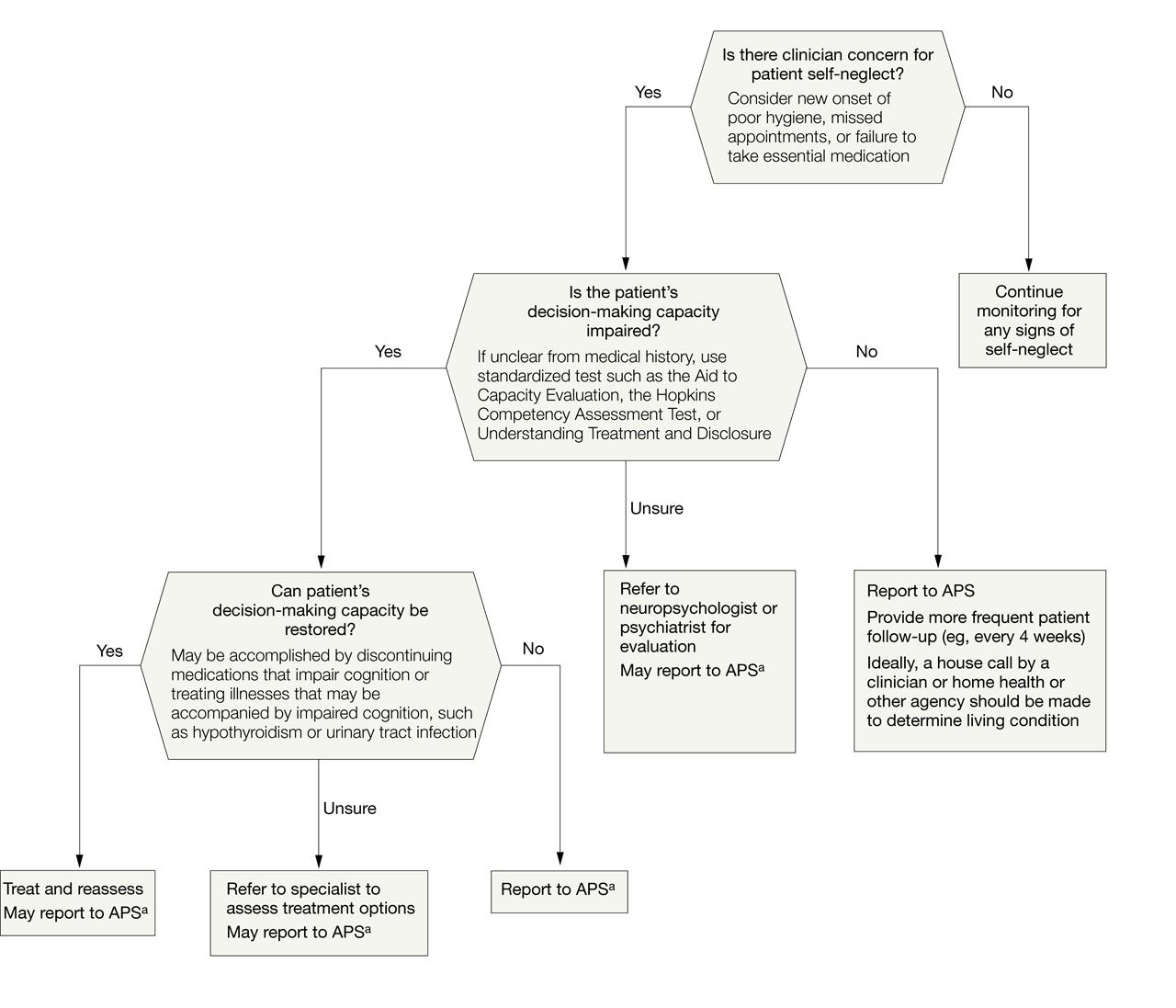
- Capacity assessment: If self-neglect suspected — Aid to Capacity Evaluation, Hopkins Competency Assessment Test [26]
- Fall risk: Timed Up and Go, STEADI algorithm
- Elder abuse screening: ED-MATS (Emergency Department Elder Mistreatment Assessment Tool) [8][27]
- Discharge risk: BRASS (Blaylock Risk Assessment Screen Scale) — identifies patients at risk of difficult discharge [28]
The following figure illustrates a clinical algorithm for approaching suspected elder self-neglect, including capacity assessment and intervention pathways:
ECG
- Indications: Syncope, presyncope, falls, altered mental status, chest pain, new medication, palpitations, bradycardia, or tachycardia
- Key findings to assess:
- Bradycardia (medication-related: beta-blockers, calcium channel blockers, digoxin)
- New atrial fibrillation or other arrhythmia
- QTc prolongation (antipsychotics, SSRIs, antiemetics)
- Heart block
- Ischemic changes
- Low threshold for ECG in any elderly patient with unexplained functional decline or fall
Assessment
"Failure to cope" is a symptom complex, not a diagnosis. The clinical summary should deconstruct the presentation into its component domains: [3]
- Medical: Identify and treat acute/subacute medical illness (present in ~88% of cases) [1]
- Functional: Quantify ADL/IADL impairments and compare to baseline
- Cognitive: Delirium vs. dementia vs. depression (the "3 Ds")
- Nutritional: Degree of malnutrition, reversible causes
- Social: Support network adequacy, caregiver status, housing, finances
Severity stratification
- Mild: IADL decline only, intact cognition, some social support → likely safe for discharge with services
- Moderate: ADL decline, mild cognitive impairment, limited support → may need observation, intensive discharge planning
- Severe: Multiple ADL dependencies, delirium/dementia, no caregiver, unsafe home → likely requires admission and/or placement
Complications: Prolonged hospitalization itself causes iatrogenic harm in elderly — deconditioning, nosocomial infection, delirium, falls, pressure injuries.
Treatment Plan
Initial stabilization (ED)
- Treat identified acute medical conditions (antibiotics for infection, fluids for dehydration, glucose correction, etc.)
- Medication reconciliation — discontinue or reduce FRIDs when possible [29]
- Pain management (prefer acetaminophen <3g/day; avoid new opioids/NSAIDs if possible) [10]
- Nutritional support: oral supplements, address dehydration
- Delirium prevention: reorientation, minimize tethers, avoid unnecessary sedation, correct sensory deficits (glasses, hearing aids)
Targeted interventions
- Depression: Start low-dose SSRI if appropriate; urgent psychiatric referral if suicidal
- Cognitive impairment: Avoid anticholinergics; consider cholinesterase inhibitor referral for outpatient
- Frailty: Exercise/rehabilitation referral — evidence supports multicomponent exercise programs [14]
- Malnutrition: Oral nutritional supplements, dietitian referral, address reversible causes (dental, dysphagia, depression) [5]
- Caregiver support: Assess caregiver burden, provide respite care resources [19]
Social work consultation is critical and should be initiated early — available in ~78% of EDs with SDOH response policies. [24]
Disposition
Admission criteria
- Acute medical illness requiring inpatient treatment
- Delirium requiring workup and monitoring
- Unsafe for discharge: no caregiver, unable to perform basic ADLs, unable to ambulate safely [7]
- Concern for elder abuse/neglect requiring safe placement
- Patients with dementia and behavioral disturbance no longer manageable at home [28]
Observation indications
- Borderline cases awaiting social work evaluation, home services setup, or family meeting
- Awaiting capacity assessment
Discharge criteria
- Acute medical issues resolved or stable
- Adequate functional status to return home safely (can ambulate, toilet, feed self or has caregiver)
- Home services arranged (home health, Meals on Wheels, PT/OT)
- Safe home environment confirmed
- Follow-up arranged within 1–2 weeks
Specialist consultation triggers
- Geriatrics: Complex frailty, goals of care, comprehensive geriatric assessment [20][22]
- Psychiatry: Depression with suicidality, psychosis, capacity concerns
- Adult Protective Services: Suspected abuse, neglect, or self-neglect [17]
- Social work: All cases — for resource coordination, discharge planning, community referrals
Postacute care options (when discharge home is not feasible): [19][30]
- Home health (skilled nursing + rehab, requires homebound status)
- Adult day programs
- Assisted living facility
- Skilled nursing facility (SNF)
- Programs of All-Inclusive Care for the Elderly (PACE)
- Area Agencies on Aging for community resources
Follow Up / Return Precautions
- Follow-up timing: PCP within 1–2 weeks; geriatrics referral if available; home health within 48 hours of discharge if ordered [31]
- Return precautions (counsel patient and family):
- New confusion, worsening disorientation
- Fever or signs of infection
- Falls or inability to ambulate
- Inability to eat or drink
- Medication side effects (dizziness, excessive sedation)
- Worsening depression or suicidal thoughts
- Patient/family counseling:
- "Failure to cope" often signals a turning point — discuss goals of care and advance directives [2]
- Educate on fall prevention (remove rugs, improve lighting, grab bars)
- Discuss long-term care planning proactively before the next crisis [19]
- Provide written discharge instructions in large font; ensure caregiver understands plan
- Expected course: Depends entirely on underlying etiology — reversible causes (infection, medication, depression) may allow return to baseline; progressive conditions (dementia, advanced frailty) require ongoing care escalation
Relevant ICD-10 Codes
Also code the specific underlying medical diagnosis when identified — avoid using "failure to cope" as a standalone diagnosis, as it leads to diagnostic closure and delays in care. [1]
The following figure from Smulowitz et al. illustrates how functional status, cognition, and social support cumulatively influence the probability of hospital admission from the ED in older adults:
References
1. The Diagnosis "Failure to Thrive" and Its Impact on the Care of Hospitalized Older Adults: A Matched Case-Control Study. — Tsui C, Kim K, Spencer M. BMC Geriatrics. 2020.
2. Geriatric Failure to Thrive. — Robertson RG, Montagnini M. American Family Physician. 2004.
3. "Failure to Thrive" in Older Adults. — Sarkisian CA, Lachs MS. Annals of Internal Medicine. 1996.
4. Unintentional Weight Loss in Older Adults. — Gaddey HL, Holder KK. American Family Physician. 2021.
5. Malnutrition in Older Adults. — Cruz-Jentoft AJ, Volkert D. The New England Journal of Medicine. 2025.
6. Association of Functional Status, Cognition, Social Support, and Geriatric Syndrome With Admission From the Emergency Department. — Smulowitz PB, Weinreb G, McWilliams JM, O'Malley AJ, Landon BE. JAMA Internal Medicine. 2023.
7. Geriatric Emergency Department Guidelines. — Annals of Emergency Medicine. 2014.
8. Best Practices Guidelines for Trauma Center Recognition of Child Abuse, Elder Abuse, and Intimate Partner Violence. — Christine S. Cocanour MD FACS FCCM, Randall S. Burd MD PhD FACS, James W Davis MD FACS, et al American College of Surgeons (2019). 2019.
9. The Forensic Lens: Bringing Elder Neglect Into Focus in the Emergency Department. — DeLiema M, Homeier DC, Anglin D, Li D, Wilber KH. Annals of Emergency Medicine. 2016.
10. Risk Assessment and Prevention of Falls in Older Community-Dwelling Adults: A Review. — Colón-Emeric CS, McDermott CL, Lee DS, Berry SD. The Journal of the American Medical Association. 2024.
11. Best Practices Guidelines Geriatric Trauma Management. — Alicia Mangram MD FACS, Jessica M. Berdeja MD, Christine S. Cocanour MD FACS FCCM, et al American College of Surgeons (2023). 2023.
12. Falls in Older Adults: Approach and Prevention. — Coulter JS, Randazzo J, Kary EE, Samar H. American Family Physician. 2024.
13. American Geriatrics Society Response to the World Falls Guidelines. — Eckstrom E, Vincenzo JL, Casey CM, et al. Journal of the American Geriatrics Society. 2024.
14. Frailty in Older Adults. — Kim DH, Rockwood K. The New England Journal of Medicine. 2024.
15. Applicability of the GLIM Criteria for the Diagnosis of Malnutrition in Older Adults in the Emergency Ward: A Pilot Validation Study. — Muñoz Fernandez SS, Garcez FB, Alencar JCG, et al. Clinical Nutrition. 2021.
16. Emergency Department Comprehensive Social Risk Screening and Resource Referral Program. — Stillman K, Dahut A, Caudill A, et al. The Western Journal of Emergency Medicine. 2025.
17. Assisting Adult Protective Services in Addressing Maltreatment in Older Adults. — Unwin BK, Stubbs SL, D'Heron H. American Family Physician. 2022.
18. Self-Neglect in Older Adults: A Primer for Clinicians. — Pavlou MP, Lachs MS. Journal of General Internal Medicine. 2008.
19. Care Transition and Long-term Care Options for Older Adults. — Unwin BK, Bedsaul NB, Stubbs S. American Family Physician. 2022.
20. Comprehensive Geriatric Assessment in the Emergency Department. — Ellis G, Marshall T, Ritchie C. Clinical Interventions in Aging. 2014.
21. Factors Associated With Admission to Bed-Based Care: Observational Prospective Cohort Study in a Multidisciplinary Same Day Emergency Care Unit (SDEC). — Elias TCN, Bowen J, Hassanzadeh R, Lasserson DS, Pendlebury ST. BMC Geriatrics. 2021.
22. Implementing an Acute Frailty Service in the Emergency Department: A Mixed-Methods Service Evaluation of Feasibility, Patient Outcomes and Experience. — Zhang Y, Green V, Montagu A. Journal of Evaluation in Clinical Practice. 2026.
23. Evaluating and Treating Unintentional Weight Loss in the Elderly. — Huffman GB. American Family Physician. 2002.
24. Screening and Response for Adverse Social Determinants of Health in US Emergency Departments. — Molina MF, Cash RE, Loo SS, et al. JAMA Network Open. 2025.
25. Functional Assessments Utilised in Emergency Departments: A Systematic Review. — Bissett M, Cusick A, Lannin NA. Age and Ageing. 2013.
26. Elder Abuse and Self-neglect: “I Don't Care Anything About Going to the Doctor, to Be Honest. . . . ”. — Mosqueda L, Dong X. The Journal of the American Medical Association. 2011.
27. Identifying and Initiating Intervention for Elder Abuse and Neglect in the Emergency Department. — Rosen T, Stern ME, Elman A, Mulcare MR. Clinics in Geriatric Medicine. 2018.
28. Prevalence, Determinants and Practical Implications of Inappropriate Hospitalizations in Older Subjects: A Prospective Observational Study. — Isaia G, Brunetti E, Presta R, et al. European Journal of Internal Medicine. 2021.
29. Prevention of Falls in Community-Dwelling Older Adults. — Ganz DA, Latham NK. The New England Journal of Medicine. 2020.
30. Navigating Postacute Care Options for Patients After Hospital Discharge. — Deardorff WJ, Burke RE, Makam AN. JAMA Internal Medicine. 2026.
31. Comprehensive Discharge Planning and Home Follow-up of Hospitalized Elders: A Randomized Clinical Trial. — Naylor MD, Brooten D, Campbell R, et al. The Journal of the American Medical Association. 1999.
32. CMS.gov: R62-Lack of expected normal physiol dev in childhood and adults. — Centers for Medicare & Medicaid Services (CMS) and the National Center for Health Statistics 2024.
Figures
More from Deep Dive
Reviewed by Dr. Lucas Mastropaolo. SymptomDx is an educational tool for medical professionals — it does not replace clinical judgment. Verify all clinical data and drug dosages with authoritative sources.