Sedative-Hypnotic Toxicity
Sedative-hypnotic toxicity encompasses poisoning from benzodiazepines, barbiturates, non-benzodiazepine "Z-drugs" (zolpidem, zaleplon, zopiclone), GHB, chloral hydrate, and older agents (glutethimide, ethchlorvynol, meprobamate). The hallmark is CNS depression ranging from drowsiness to coma, with respiratory compromise as the primary mechanism of death.[1-3] Isolated benzodiazepine overdose rarely causes life-threatening hemodynamic instability; most fatalities involve co-ingestion with opioids, alcohol, or other CNS depressants.[1-2] Barbiturates carry a significantly narrower therapeutic index and higher lethality than benzodiazepines.[4-5]
History
- Substance identification: Which agent(s), dose, formulation (immediate vs. extended release), route (oral, IV, rectal)
- Timing: Time of ingestion relative to presentation; single acute vs. staggered ingestion
- Intent: Accidental, recreational, or intentional (suicidal) — critical for disposition[6]
- Co-ingestants: Opioids, alcohol, TCAs, acetaminophen, other OTC medications — polysubstance ingestion is the rule, not the exception[2]
- Symptom progression: Drowsiness → confusion → slurred speech → ataxia → stupor → coma[3][5]
- Associated symptoms: Nausea/vomiting, anterograde amnesia, paradoxical agitation (rare)[3][5]
- Important negatives: Chest pain, seizure activity, trauma/falls during intoxication
Alarm Features
- Respiratory depression or apnea — the primary killer[1-2]
- Loss of protective airway reflexes (absent gag, pooling secretions)
- Hemodynamic instability (hypotension, bradycardia) — suggests barbiturate overdose, massive ingestion, or co-ingestant[5][7]
- Hypothermia[3][8]
- Markedly abnormal vital signs (lowered or elevated BP, HR, or RR) raise concern for additional drugs or alcohol[3]
- Fluctuating level of consciousness — classic for highly lipophilic older agents (glutethimide, ethchlorvynol) due to enterohepatic recirculation[4]
- Pulmonary edema or circulatory collapse — seen with massive barbiturate exposure[9-10]
Medications
Causative agents (by class)
- Benzodiazepines: alprazolam, diazepam, lorazepam, midazolam, clonazepam, etc.
- Barbiturates: phenobarbital, pentobarbital, secobarbital, butalbital
- Z-drugs: zolpidem, zaleplon, zopiclone/eszopiclone
- Others: GHB/GBL, chloral hydrate, meprobamate, glutethimide, ethchlorvynol
- Novel benzodiazepines: clonazolam, flualprazolam, etizolam (increasingly found in counterfeit pills)[11]
Antidote — Flumazenil (benzodiazepine-specific)
- Dose: 0.2 mg IV over 30 seconds, may repeat 0.3 mg then 0.5 mg increments q1 min, max 3 mg in overdose[12]
- Contraindications: chronic benzodiazepine dependence, co-ingestion of seizure-provoking drugs (TCAs), epilepsy on benzodiazepines, undifferentiated coma[1-2][12]
- Safe in low-risk settings: iatrogenic procedural sedation reversal, pediatric exploratory ingestions[1-2]
- Does not reverse barbiturate, GHB, or other non-benzodiazepine sedative toxicity
Medications to avoid
- Flumazenil in undifferentiated coma or suspected TCA co-ingestion (risk of refractory seizures and dysrhythmias)[1][12]
- Long-acting paralytics for RSI (may mask seizures) — prefer succinylcholine or rocuronium[6]
Diet
- NPO in obtunded patients due to aspiration risk
- Hydration: IV crystalloid for volume support; avoid oral intake until airway protective reflexes return
- No specific dietary triggers; however, alcohol co-ingestion synergistically potentiates CNS depression[1-2]
- Long-term: counsel on avoidance of alcohol with prescribed sedative-hypnotics
Review of Systems
- Neurologic: Level of consciousness, confusion, amnesia, ataxia, slurred speech, seizures
- Respiratory: Dyspnea, apnea, snoring/stridor (airway obstruction)
- Cardiovascular: Palpitations, syncope, chest pain
- GI: Nausea, vomiting (aspiration risk)
- Psychiatric: Suicidal ideation, depression, substance use history
- Musculoskeletal: Prolonged immobilization → rhabdomyolysis, compartment syndrome
- Skin: Pressure blisters ("barb burns") from prolonged immobility — classically associated with barbiturate coma
Collateral History and Family History
- Collateral is critical when the patient cannot provide history: EMS, family, friends, pill bottles, medication lists, pharmacy records[6]
- Photographs of medications at the scene are invaluable
- Psychiatric history: Prior suicide attempts, depression, access to medications
- Substance use history: Chronic benzodiazepine or opioid use (determines flumazenil safety and withdrawal risk)[1][13]
- Family history: Substance use disorders, psychiatric illness, seizure disorders
Risk Factors
- Polysubstance use — the single greatest risk factor for mortality[1-2]
- Chronic benzodiazepine or opioid prescriptions
- Psychiatric comorbidities (depression, anxiety, personality disorders)[13]
- Elderly patients — increased sensitivity, fall risk, prolonged sedation[5]
- Hepatic or renal impairment — impaired drug metabolism/excretion
- History of prior overdose or suicide attempt
- Access to large quantities of sedative-hypnotics
- Use of illicit benzodiazepines (counterfeit pills containing novel benzodiazepines or fentanyl)[2][11]
Differential Diagnosis
- Opioid overdose — miosis, more profound respiratory depression; responds to naloxone[2]
- Alcohol intoxication — similar presentation; check ethanol level
- Hypoglycemia — check point-of-care glucose immediately[6]
- Carbon monoxide poisoning — altered mental status, headache; check carboxyhemoglobin[8]
- Anticholinergic toxidrome — dry, flushed, mydriasis, tachycardia (opposite of sedative-hypnotic)
- Hepatic encephalopathy — asterixis, elevated ammonia
- Postictal state — history of seizure disorder
- Structural CNS pathology — stroke, subdural hematoma (especially after fall while intoxicated)[5]
- Hypothyroidism/myxedema coma — hypothermia, bradycardia
- Sepsis/meningitis — fever, altered mental status
- Key distinguishing features: The sedative-hypnotic toxidrome classically presents with normal or small pupils (unlike opioid miosis), hypothermia, hypotension, respiratory depression, and hyporeflexia without the anticholinergic signs (dry skin, mydriasis, tachycardia).[5]
Past Medical History
- Chronic benzodiazepine or sedative use — determines tolerance, withdrawal risk, and flumazenil safety[1][12]
- Seizure disorder — flumazenil contraindicated if benzodiazepines are used for seizure control[12]
- Psychiatric history — depression, prior suicide attempts, personality disorders
- Substance use disorders — alcohol, opioids, polysubstance
- Hepatic disease — impaired metabolism of most sedative-hypnotics
- Chronic pain on opioids — high risk for synergistic respiratory depression
- Prior overdose history
Physical Exam
Vital signs
- Bradypnea/apnea — most critical finding
- Hypotension (especially barbiturates)
- Bradycardia (mild)
- Hypothermia[3][5]
Neurologic
- Decreased level of consciousness (GCS documentation essential)[6]
- Slurred speech, ataxia, nystagmus[5]
- Hyporeflexia, hypotonia
- Normal or small pupils (not pinpoint like opioids)
- Absent gag reflex in severe cases
Skin
- Pressure blisters ("barb burns") — bullous lesions over pressure points from prolonged immobility (classically barbiturates but not pathognomonic)
- Check for transdermal patches (fentanyl), track marks[6]
Focused maneuvers
- Assess airway patency and protective reflexes
- Check for signs of trauma (subdural hematoma from fall)
- Compartment checks if prolonged immobilization suspected
Lab Studies
- Point-of-care glucose — immediate, to rule out hypoglycemia[6]
- Serum acetaminophen and salicylate levels — mandatory in all intentional overdoses and undifferentiated altered mental status[6]
- BMP (electrolytes, creatinine, bicarbonate, anion gap)[6]
- ABG/VBG — assess for hypercapnia and respiratory acidosis; characterize acid-base status[6][14]
- Hepatic function panel — baseline and to evaluate for co-ingestant hepatotoxicity
- Serum ethanol level
- CK — if prolonged immobilization suspected (rhabdomyolysis)
- Pregnancy test — women of childbearing age[6]
- Barbiturate level — quantitative phenobarbital level useful for guiding enhanced elimination[7][15]
- Urine drug screen — limited acute utility; high false-positive/negative rates; does not detect novel benzodiazepines. Useful for confirming exposure but should not guide acute management.[6][11]
- Lactate — if hemodynamic instability
Imaging
- Chest X-ray: Indicated if hypoxic, tachypneic, or obtunded — evaluate for aspiration pneumonitis, ARDS, or pulmonary edema[6]
- CT head without contrast: If altered mental status is disproportionate to expected toxicity, concern for trauma/fall, or focal neurologic findings[5]
- Abdominal imaging: Generally not indicated; plain films have low sensitivity for most sedative-hypnotics. Consider CT abdomen if body packing suspected[6]
- Imaging is unnecessary in straightforward, witnessed benzodiazepine ingestions with expected clinical course
Special Tests
- Glasgow Coma Scale — serial assessments to track clinical trajectory[6]
- Poison Control consultation (800-222-1222) — recommended for all significant ingestions[6]
- Quantitative drug levels: Phenobarbital level is clinically useful (correlates with severity and guides enhanced elimination). Benzodiazepine levels are generally not clinically useful.[7][15]
- Bedside ultrasound: Assess cardiac function and IVC if hemodynamically unstable
- End-tidal CO₂ monitoring: Useful for detecting hypoventilation, especially during observation
ECG
- Obtain ECG in all significant sedative-hypnotic overdoses, especially with unknown co-ingestants[6]
- Isolated benzodiazepine/barbiturate overdose: Typically shows sinus bradycardia or normal sinus rhythm; no characteristic morphologic changes
Critical role is to rule out co-ingestants
- Prolonged QRS → sodium channel blocker (TCA) co-ingestion[6][16]
- Prolonged QTc → multiple psychotropic co-ingestants; QTc >500 ms is highest risk for adverse cardiovascular events[17-18]
- AV block → beta-blocker or calcium channel blocker co-ingestion
- Continuous cardiac monitoring recommended until the patient is free of drug influence[17]
- A QTc >500 ms on admission ECG in drug overdose carries an OR of 11.2 for adverse cardiovascular events[18]
Assessment
Severity stratification
- Mild: Drowsiness, slurred speech, ataxia — maintains airway and protective reflexes
- Moderate: Stupor, significant hypotension, diminished reflexes — requires close monitoring
- Severe: Coma, respiratory depression/apnea, hemodynamic collapse — requires airway intervention and ICU care
Key clinical pearls
- Isolated benzodiazepine overdose is rarely fatal in adults; always suspect co-ingestants when life-threatening features are present[1-2]
- Barbiturate overdose has a much narrower therapeutic index and higher mortality[4-5][7]
- Older lipophilic agents (glutethimide, ethchlorvynol) cause fluctuating consciousness due to enterohepatic recirculation — observe for several days[4]
- Long-acting benzodiazepines (diazepam, chlordiazepoxide) may cause intoxication lasting several days due to active metabolites[4]
- Novel/designer benzodiazepines (clonazolam) may cause prolonged sedation (up to 30 hours) and are not detected on standard immunoassay screens[11]
Complications
- Aspiration pneumonitis/pneumonia
- Rhabdomyolysis and compartment syndrome from prolonged immobilization
- Pressure injuries/blisters
- Hypothermia
- Anoxic brain injury (from prolonged hypoxia)
Treatment Plan
Initial stabilization (ABCs)
- Airway: Head-tilt/chin-lift, nasopharyngeal airway; intubate if unable to protect airway[1][6]
- Breathing: Bag-mask ventilation → endotracheal intubation if needed; supplemental O₂
- Circulation: IV access, crystalloid bolus for hypotension; vasopressors if refractory
Decontamination
- Activated charcoal (1 g/kg, max 50 g): Consider if within 1 hour of ingestion and airway is intact/protected[4][6]
- Multiple-dose activated charcoal (MDAC): Indicated for phenobarbital poisoning (reduces half-life from ~80 to ~40 hours)[6][15]
Antidote
- Flumazenil — reserved for low-risk, known benzodiazepine-only ingestions (e.g., iatrogenic procedural sedation, pediatric exploratory ingestion)[1-2][12]
- Dose: 0.2 mg IV over 30 sec → 0.3 mg → 0.5 mg increments q1 min, max 3 mg[12]
- Do not use in undifferentiated coma, chronic benzodiazepine users, suspected TCA co-ingestion, or seizure disorder patients on benzodiazepines[1][12]
- No antidote exists for barbiturates, GHB, or other non-benzodiazepine sedative-hypnotics
Enhanced elimination (barbiturates)
- Urinary alkalinization with IV sodium bicarbonate (target urine pH ~7.5) — enhances excretion of phenobarbital[4][15]
- Hemodialysis/CRRT: Consider for life-threatening barbiturate toxicity with refractory hypotension[14-15]
Supportive care
- Continuous pulse oximetry, capnography, cardiac monitoring
- Rewarming for hypothermia
- DVT prophylaxis if prolonged immobilization
- Frequent repositioning to prevent pressure injuries and rhabdomyolysis
- Psychiatric evaluation once medically cleared (if intentional ingestion)
Disposition
Admission criteria (ICU)
- Intubation or need for mechanical ventilation
- Hemodynamic instability requiring vasopressors
- Severe barbiturate poisoning requiring enhanced elimination
- GCS ≤8 or declining mental status
- Significant co-ingestants requiring monitoring (e.g., acetaminophen, TCAs)
Observation
- Moderate sedation with stable vitals — observe until clinically improving and able to protect airway
- Minimum 4–6 hours observation for short-acting agents; longer for long-acting benzodiazepines or barbiturates[4]
- Older lipophilic agents (glutethimide, ethchlorvynol) require several days of observation due to fluctuating levels[4]
Discharge criteria
- Alert, ambulatory, tolerating PO, stable vitals for appropriate observation period
- No respiratory depression
- Psychiatric clearance if intentional ingestion
- Safe disposition plan (not returning to environment with access to lethal means)
Specialist consultation triggers
- Toxicology/Poison Control: All significant ingestions[6]
- Psychiatry: All intentional overdoses
- Nephrology: If hemodialysis considered for barbiturate poisoning[14-15]
Follow Up / Return Precautions
Follow-up timing
- PCP or psychiatry follow-up within 48–72 hours for intentional ingestions
- Substance use disorder referral if applicable
- Medication reconciliation — reassess need for sedative-hypnotic prescriptions
- Return precautions — instruct patient/family to return immediately for:
- Recurrent drowsiness or difficulty arousing (especially with long-acting agents or if flumazenil was used, as re-sedation can occur)[12]
- Difficulty breathing or noisy breathing
- Confusion, agitation, or seizures (may indicate withdrawal in chronic users)[5][19]
- Fever, cough, or chest pain (aspiration pneumonitis)
- Dark urine or muscle pain (rhabdomyolysis)
Patient counseling
- Avoid alcohol and other CNS depressants
- Secure medications to prevent accidental pediatric ingestion
- Lethal means counseling and safe storage/disposal of unused medications
- Expected recovery: mild cases resolve within hours; long-acting agents may cause residual sedation for days[4]
- Relevant images 2 items
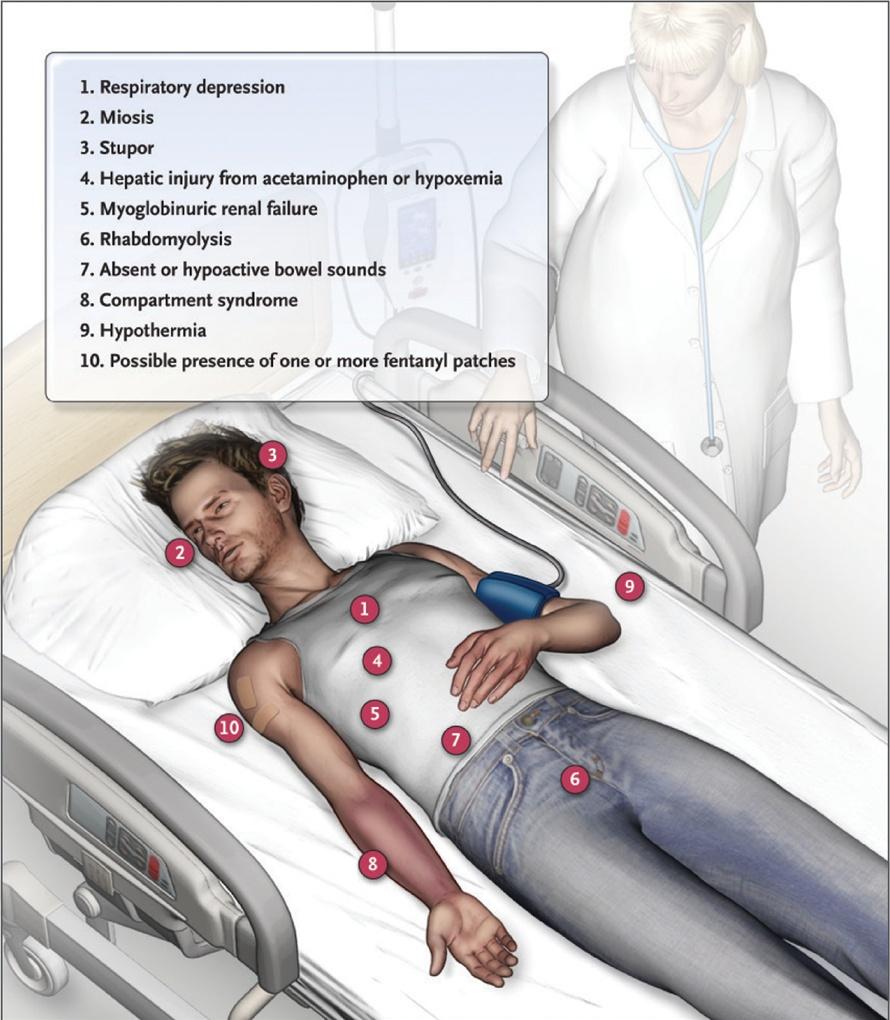
- Clinical Findings in Opioid Analgesic Intoxication.
- NEJM July 11, 2012
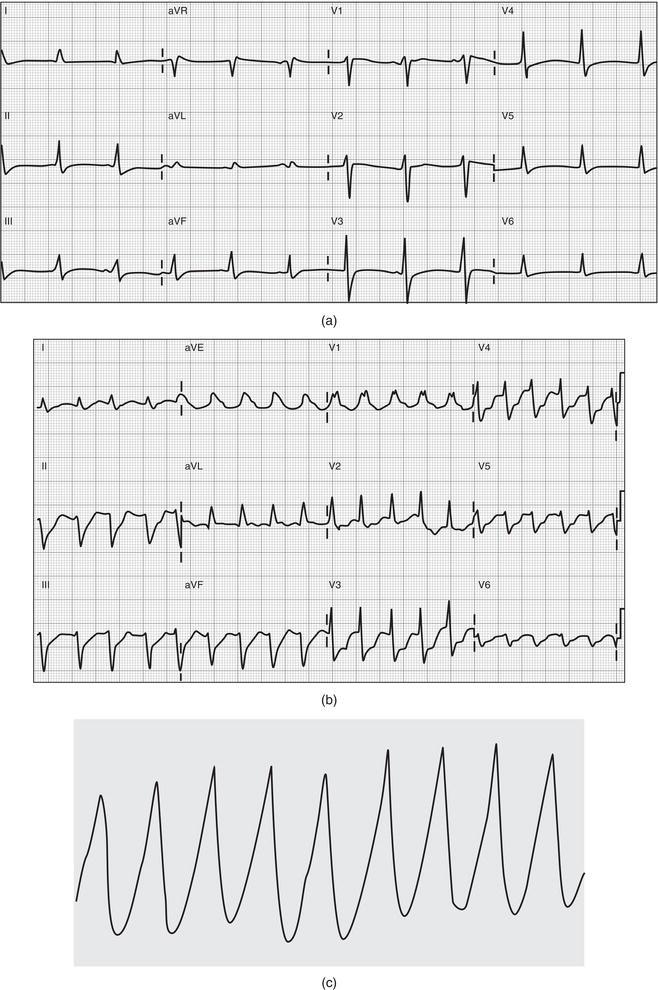
- (a) Minimally widened QRS complex in the setting of a cardiotoxic ingestion with sodium channel blocking ability. (b) Tricyclic antidepressant overdose with characteristic changes on ECG, including sinus tachycardia, deep S wave in lead I, R wave in lead aVr, and widened QRS complex. (c) Ventricular tachycardia related to sodium channel blockade.
- Electrocardiagram in Emergency and Acute Care December 31, 2022
References
1. 2023 American Heart Association Focused Update on the Management of Patients With Cardiac Arrest or Life-Threatening Toxicity Due to Poisoning: An Update to the American Heart Association Guidelines for Cardiopulmonary Resuscitation and Emergency Cardiovascular Care. — Lavonas EJ, Akpunonu PD, Arens AM, et al. Circulation. 2023.
2. Part 10: Adult and Pediatric Special Circumstances of Resuscitation: 2025 American Heart Association Guidelines for Cardiopulmonary Resuscitation and Emergency Cardiovascular Care. — Cao D, Arens AM, Chow SL, et al. Circulation. 2025.
3. FDA Drug Label. — Updated date: 2025-04-29. Food and Drug Administration.
4. Role of the Primary Care Physician in Problems of Substance Abuse. — Weaver MF, Jarvis MA, Schnoll SH. Archives of Internal Medicine. 1999.
5. Diagnostic and Statistical Manual of Mental Disorders. — Dilip V. Jeste, Jeffrey A. Lieberman, David Fassler, et al American Psychiatric Association (2022). 2022.
6. Acute Medication Poisoning. — Vega IL, Griswold MK, Laskey D. American Family Physician. 2024.
7. FDA Drug Label. — Updated date: 2017-06-30. Food and Drug Administration.
8. Toxin-Induced Coma and Central Nervous System Depression. — Krause M, Hocker S. Neurologic Clinics. 2020.
9. FDA Drug Label. — Updated date: 2026-05-05. Food and Drug Administration.
10. FDA Drug Label. — Updated date: 2026-01-28. Food and Drug Administration.
11. Non-Fatal Intoxications Involving the Novel Benzodiazepine Clonazolam: Case Series From the Emerging Drugs Network of Australia - Victoria Project. — Syrjanen R, Greene SL, Castle JW, et al. Clinical Toxicology. 2023.
12. FDA Drug Label. — Updated date: 2020-01-03. Food and Drug Administration.
13. The Joint Clinical Practice Guideline on Benzodiazepine Tapering: Considerations when Benzodiazepine Risks Outweigh Benefits. — Emily Brunner, Chwen-Yuen A. Chen, Tracy Klein, et al American College of Medical Toxicology (2024). 2024.
14. Poisoning by Abnormally High Blood Phenobarbital Concentration Treated With Extracorporeal Therapy. — Kohara S, Kamijo Y, Seki S, Hasegawa E. The American Journal of Emergency Medicine. 2023.
15. Enhanced Elimination in Acute Barbiturate Poisoning - A Systematic Review. — Roberts DM, Buckley NA. Clinical Toxicology. 2011.
16. Electrocardiographic Abnormalities Associated With Poisoning. — Delk C, Holstege CP, Brady WJ. The American Journal of Emergency Medicine. 2007.
17. Update to Practice Standards for Electrocardiographic Monitoring in Hospital Settings: A Scientific Statement From the American Heart Association. — Sandau KE, Funk M, Auerbach A, et al. Circulation. 2017.
18. Validation of the Prognostic Utility of the Electrocardiogram for Acute Drug Overdose. — Manini AF, Nair AP, Vedanthan R, Vlahov D, Hoffman RS. Journal of the American Heart Association. 2017.
19. Guidelines for Managing Substance Withdrawal in Jails. — Jeffrey Alvarez MD CCHP, Andrew F. Angelino MD, Oscar Aviles CPM CJM CCE CCHP, et al American Society of Addiction Medicine (2023). 2023.
Figures
More from Deep Dive
Reviewed by Dr. Lucas Mastropaolo. SymptomDx is an educational tool for medical professionals — it does not replace clinical judgment. Verify all clinical data and drug dosages with authoritative sources.