Sepsis
Sepsis is a life-threatening organ dysfunction caused by a dysregulated host response to infection, with a mortality rate of 15–30% depending on severity.[1-2] Septic shock — the most severe form — is defined by vasopressor requirement to maintain MAP ≥65 mmHg and lactate >2 mmol/L after adequate fluid resuscitation, carrying mortality >30%.[1] The following is a comprehensive clinical summary organized for emergency medicine and primary care workflows.
History
- Source-directed HPI: Cough/dyspnea (pneumonia), dysuria/frequency (UTI), abdominal pain (intra-abdominal), wound erythema/drainage (skin/soft tissue), headache/neck stiffness (meningitis)[3]
- Timing and progression: Onset of symptoms, rapidity of deterioration, duration of fever, any preceding illness or procedure
- Severity markers: Confusion, decreased urine output, inability to tolerate PO, rigors, syncope
- Associated symptoms: Nausea/vomiting, diarrhea, myalgias, rash
- Important negatives: Recent travel, animal/insect exposures, immunosuppressive medications, recent antibiotics, recent surgery or instrumentation, indwelling devices (catheters, prosthetics)[4]
Alarm Features
- Altered mental status (GCS <15), hypotension (SBP ≤100 mmHg), tachypnea (RR ≥22) — the qSOFA triad, which identifies patients at high risk for poor outcomes[1][5]
- Lactate ≥4 mmol/L (severe tissue hypoperfusion)[1]
- Mottled or cyanotic skin, prolonged capillary refill >3 seconds[2]
- New-onset oliguria (<0.5 mL/kg/hr)
- Temperature >38.3°C or <36°C (hypothermia is particularly ominous)[6]
- Refractory hypotension despite initial fluid bolus
- Signs of DIC: petechiae, purpura, oozing from IV sites[7]
Medications
Treatments
- Antibiotics: Empiric broad-spectrum IV antibiotics within 1 hour for septic shock, within 3 hours for sepsis without shock[2][8]
- Common regimens: Piperacillin-tazobactam, meropenem, or cefepime ± vancomycin depending on MRSA risk and local antibiograms[4][7]
- Narrow once culture/sensitivity data available; add antifungals only if high risk for invasive candidiasis[3][7]
- Vasopressors: Norepinephrine first-line; add vasopressin (0.03 U/min) if NE reaches 0.25–0.5 mcg/kg/min; epinephrine as third-line[8-9]
- Corticosteroids: IV hydrocortisone 200 mg/day (50 mg q6h) suggested for septic shock with ongoing vasopressor requirement ± fludrocortisone 50 mcg daily[2][9-10]
Medication contributors to sepsis risk or masking
- Immunosuppressants (steroids, chemotherapy, biologics) increase infection risk[7][11]
- Beta-blockers and antipyretics may mask tachycardia and fever[3]
- NSAIDs may worsen renal perfusion in sepsis
Contraindicated/caution
- Avoid hydroxyethyl starch solutions (increased mortality)[8]
- Avoid synthetic colloid gelatin (insufficient evidence)[8]
Diet
- NPO initially if hemodynamically unstable or if surgical source control may be needed
- Aggressive IV hydration is the priority; enteral nutrition should be initiated early (within 24–48 hours) once hemodynamically stable per ICU nutrition guidelines
- Long-term: Address malnutrition, which impairs immune function and increases sepsis risk[11]
Review of Systems
- Respiratory: Cough, sputum production, dyspnea, pleuritic chest pain
- GU: Dysuria, frequency, flank pain, vaginal/penile discharge
- GI: Abdominal pain, nausea, vomiting, diarrhea, jaundice
- MSK/Skin: Wound changes, erythema, swelling, joint pain
- Neuro: Confusion, headache, neck stiffness, focal deficits
- Constitutional: Fever, chills, rigors, night sweats, fatigue, weight loss
Collateral History and Family History
- Collateral: Baseline mental status (critical for detecting altered mentation), functional status, recent hospitalizations, recent antibiotic use, recent procedures/surgeries, indwelling devices[4]
- Social context: Nursing home residence, IV drug use, alcohol use disorder (OR 2.90 for sepsis), homelessness, low socioeconomic status[12-13]
- Family history: Generally less relevant acutely, though inherited immune deficiencies and genetic polymorphisms in innate immunity may influence susceptibility[7]
Risk Factors
- Age: Extremes of age; incidence rises exponentially after age 65 (OR 6.02 for age 85+)[3][12]
- Immunosuppression: HIV/AIDS, chemotherapy, chronic steroids, transplant recipients, asplenia (OR 4.41)[11-12]
- Chronic diseases: COPD (OR 3.58), diabetes (OR 1.82), CKD, liver disease, heart failure, cancer[12][14]
- Healthcare exposure: Indwelling catheters, recent surgery, prolonged hospitalization, mechanical ventilation[15-16]
- Substance use: Alcohol use disorder, IV drug use[12][14]
- Frailty: Severe frailty strongly associated with sepsis risk (crude OR 14.93) and higher case fatality (42% vs 24%)[13]
- Demographics: Male sex, Black race[7]
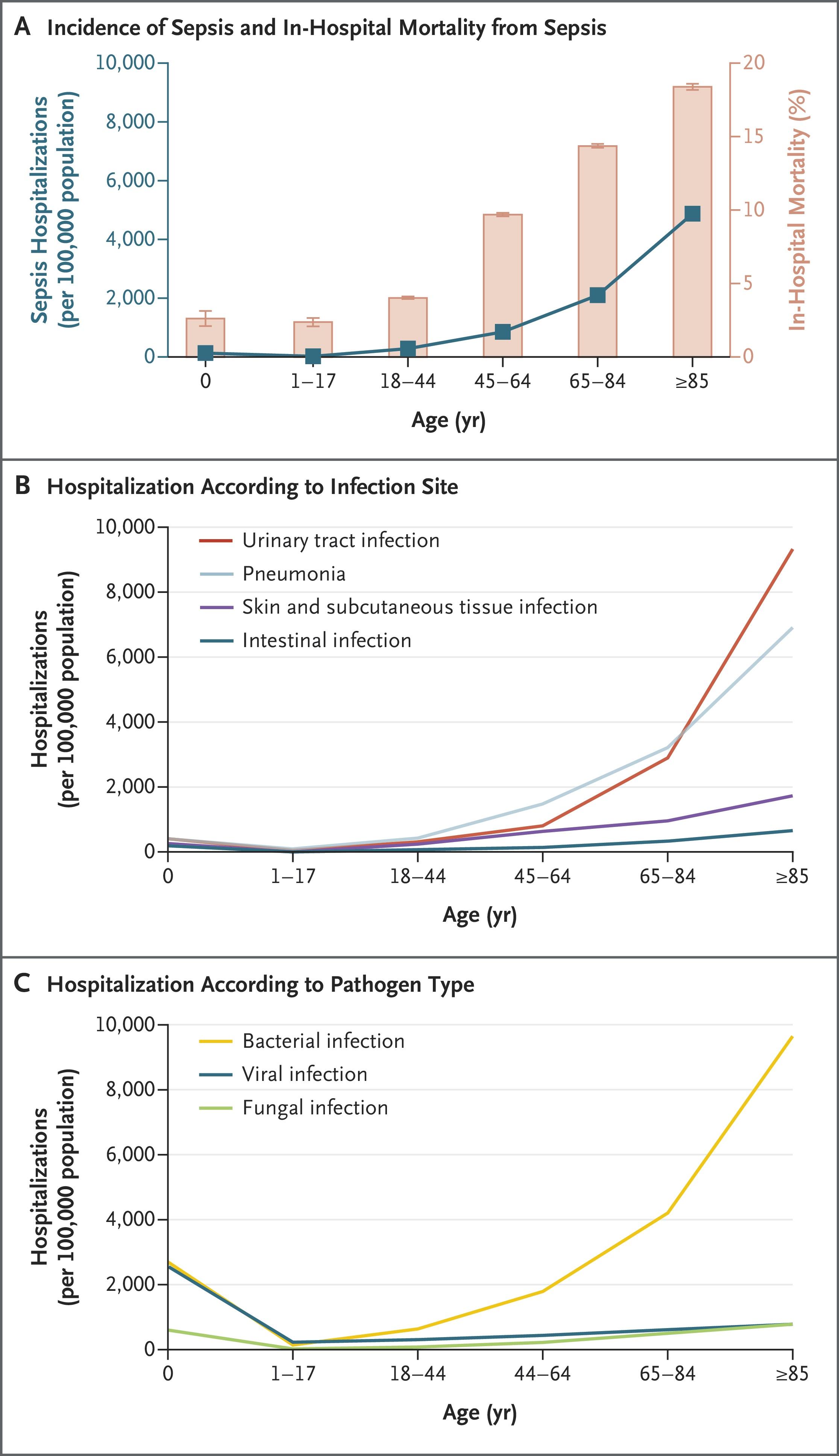
- The following figure illustrates the age-dependent epidemiology of sepsis in the United States, including incidence, mortality, infection sites, and pathogen types by age group.
- View full figure Figure 1. Epidemiologic Features of Sepsis in the United States According to Age Group. Sepsis and Septic Shock. N Engl J Med. December 4, 2024.
Differential Diagnosis
- The differential for sepsis is broad, as its clinical findings overlap with many non-infectious conditions:[4]
- Cardiogenic shock: Acute MI, decompensated heart failure — distinguish with ECG, troponin, echocardiography
- Hypovolemic shock: Hemorrhage, dehydration — assess for bleeding source, hematocrit trend
- Anaphylaxis: Urticaria, angioedema, allergen exposure
- Pulmonary embolism: Acute dyspnea, pleuritic pain, unilateral leg swelling — CT angiography
- Adrenal crisis: Chronic steroid use, hypotension, hyperkalemia, hyponatremia
- Pancreatitis: Epigastric pain, elevated lipase, may mimic abdominal sepsis
- Drug toxicity/overdose: Serotonin syndrome, neuroleptic malignant syndrome, sympathomimetic toxicity
- DKA/metabolic emergencies: Kussmaul breathing, hyperglycemia, acidosis
- Mesenteric ischemia: Elderly, atrial fibrillation, pain out of proportion to exam
- Toxic shock syndrome: Specific subset of sepsis with characteristic rash and rapid deterioration
Past Medical History
- Prior episodes of sepsis (increases risk of recurrence and long-term mortality)[17]
- Chronic organ dysfunction (baseline creatinine, liver function — needed to calculate SOFA change)
- Surgical history: Splenectomy (encapsulated organism risk), recent procedures
- Immunization status (pneumococcal, influenza, COVID-19)
- Chronic indwelling devices: Central lines, urinary catheters, prosthetic joints/valves
- Antibiotic history: Recent courses (resistance risk), known colonization with resistant organisms
Physical Exam
Vital signs
Focused exam
- General: Toxic appearance, diaphoresis, rigors
- Skin: Mottling (especially knees), petechiae/purpura (meningococcemia, DIC), cellulitis, wound infection, capillary refill time[2]
- Lungs: Crackles, decreased breath sounds, egophony (pneumonia)
- Abdomen: Tenderness, guarding, rigidity (peritonitis), costovertebral angle tenderness
- GU: Suprapubic tenderness, Foley catheter inspection
- Neuro: GCS assessment, meningismus, focal deficits
- Lines/devices: Inspect all indwelling catheters, surgical sites, and prosthetic devices for signs of infection
Lab Studies
Recommended initial labs
- Blood lactate (suggested for all suspected sepsis; ≥2 mmol/L indicates hypoperfusion; ≥4 mmol/L is severe)[1-2]
- Blood cultures (at least 2 sets, ideally before antibiotics)[4][7]
- CBC with differential (leukocytosis >12,000, leukopenia <4,000, or >10% bands)[3][6]
- BMP (creatinine for AKI, glucose for hyperglycemia/DKA)
- Hepatic function panel (bilirubin for SOFA scoring, transaminases)[4]
- Coagulation studies: PT/INR, fibrinogen, D-dimer (DIC screening)[6][18]
- Procalcitonin: Useful for antibiotic de-escalation guidance; modest sensitivity for initial diagnosis (AUROC ~0.69)[19-20]
- Urinalysis and urine culture
- ABG/VBG if respiratory compromise
Monitoring
- Serial lactate to guide resuscitation (target normalization or ≥20% decrease q2h)[2]
- Serial SOFA scoring for organ dysfunction trajectory[21]
Imaging
- Chest X-ray: First-line for all suspected sepsis (pneumonia is the most common source, 40–60% of cases)[3-4]
- CT abdomen/pelvis with contrast: When intra-abdominal source suspected (abscess, perforation, cholangitis, diverticulitis) — targeted based on clinical assessment, not routine "pan-scanning"[4][22]
- CT chest: If CXR is non-diagnostic but pulmonary source suspected
- Ultrasound: Point-of-care for biliary pathology, hydronephrosis, abscess, cardiac function (bedside echo), IVC assessment for volume status
- CT head: If meningitis/encephalitis suspected (before LP if focal neuro findings)
- Imaging is unnecessary when the source is clinically obvious (e.g., obvious cellulitis, known UTI with positive UA) and the patient is responding to treatment
- The ACR Appropriateness Criteria for sepsis recommend targeted imaging based on clinical suspicion rather than untargeted whole-body CT.[22]
Special Tests
- SOFA Score: Gold standard for defining sepsis (increase ≥2 from baseline); superior predictive validity in ICU (AUROC 0.74)[1][5]
- qSOFA: Bedside screen (RR ≥22, SBP ≤100, altered mentation); useful for identifying high-risk patients outside ICU but not recommended as sole screening tool due to low sensitivity[2][9]
- NEWS/NEWS2, MEWS, SIRS: Recommended over qSOFA for sepsis screening (higher sensitivity)[2][9]
- Point-of-care ultrasound (POCUS): Cardiac function, IVC collapsibility, lung B-lines, free fluid
- Passive leg raise test: Dynamic assessment of fluid responsiveness[2]
- Procalcitonin: Serial levels for antibiotic stewardship[20]
- Multiplex PCR panels: Rapid pathogen identification from blood; increasingly available but not yet routine[3]
ECG
- Indications: All patients with sepsis/septic shock — to evaluate for concurrent ACS, arrhythmia, or septic cardiomyopathy
- Common findings: Sinus tachycardia (most common), nonspecific ST-T wave changes
- Dangerous patterns: New atrial fibrillation (common in sepsis), ST elevation/depression (demand ischemia or type 2 MI), QTc prolongation (electrolyte derangements, medications)
- Septic cardiomyopathy: May show low voltage, diffuse T-wave changes; confirm with bedside echocardiography[7]
Assessment
- Definition (Sepsis-3): Life-threatening organ dysfunction due to dysregulated host response to infection, operationalized as suspected infection + SOFA score increase ≥2.[1]
- Septic shock: Sepsis + vasopressor requirement to maintain MAP ≥65 mmHg + lactate >2 mmol/L after adequate fluid resuscitation (mortality >40%).[1]
Severity stratification
- Lactate <2: Lower risk
- Lactate 2–4: Intermediate risk; consider fluid resuscitation[9]
- Lactate ≥4: High risk; aggressive resuscitation mandatory
- Atypical presentations: Elderly and immunocompromised patients may present without fever or with hypothermia, subtle confusion, or functional decline only. Sepsis should be considered in any patient with unexplained organ dysfunction, even without localizing signs.[3-4]
- Complications: ARDS, AKI, DIC, hepatic dysfunction, septic cardiomyopathy, critical illness polyneuropathy/myopathy, adrenal insufficiency, secondary infections.[7]
Treatment Plan
Initial stabilization (first 1–3 hours)
- IV crystalloid resuscitation: At least 30 mL/kg within 3 hours for sepsis-induced hypoperfusion (use balanced crystalloids such as lactated Ringer's over normal saline); use adjusted/ideal body weight if BMI >30[8-9]
- Antibiotics: IV broad-spectrum within 1 hour for septic shock; within 3 hours for sepsis without shock[2][8]
- Blood cultures: Obtain before antibiotics if this does not significantly delay administration[7]
- Source control: Remove infected devices, consult surgery for drainable collections[4]
Vasopressors
- Norepinephrine first-line, target MAP ≥65 mmHg; may start peripherally[4][8-9]
- Add vasopressin 0.03 U/min if NE 0.25–0.5 mcg/kg/min without reaching goal[8]
- Epinephrine as third-line agent[8]
Adjunctive therapies
- IV hydrocortisone 200 mg/day (50 mg q6h) ± fludrocortisone 50 mcg daily for septic shock with ongoing vasopressor requirement[9-10]
- Lactate-guided resuscitation: Target normalization or ≥20% decrease every 2 hours[2]
- Dynamic fluid assessment: Passive leg raise, stroke volume variation, pulse pressure variation, or POCUS to guide ongoing fluid administration[2]
Ongoing management
- Reassess antibiotic coverage at 48–72 hours with culture data; de-escalate when possible[2]
- Glucose management (target <180 mg/dL)[7]
- DVT prophylaxis, stress ulcer prophylaxis per ICU protocols
- High-flow nasal cannula for sepsis-induced hypoxic respiratory failure to reduce intubation need[8]
Disposition
ICU admission criteria
- Septic shock (vasopressor requirement and/or lactate >2 mmol/L after fluids)[2]
- Requirement for mechanical ventilation or high-level respiratory support
- Multi-organ dysfunction
- Hemodynamic instability despite initial resuscitation
- ICU admission should occur within 6 hours of recognition; delays beyond this increase mortality[2][8]
Observation/stepdown
- Sepsis without shock, responding to initial fluid resuscitation, single organ dysfunction, stable vitals after initial management
Discharge considerations
- Rarely appropriate from the ED for true sepsis; may be considered for low-risk patients with uncomplicated infection (e.g., simple UTI with transient SIRS) who are hemodynamically stable, tolerating PO, and have reliable follow-up
Specialist consultation triggers
- Surgery: Abscess, necrotizing fasciitis, bowel perforation, cholangitis requiring drainage[4]
- Infectious disease: Unusual pathogens, resistant organisms, endocarditis, immunocompromised host
- Critical care: All patients with septic shock or requiring vasopressors
Follow Up / Return Precautions
Follow-up timing
- PCP follow-up within 7 days of hospital discharge for medication reconciliation, repeat labs, and functional assessment[23]
- Screen for physical, cognitive, and emotional sequelae (post-sepsis syndrome) at follow-up[23]
- Assess for economic and social support needs[23]
Return precautions (patient counseling)
- Return immediately for: recurrent fever, worsening confusion, inability to keep fluids down, decreased urine output, new rash, worsening shortness of breath
- Sepsis survivors have elevated risk of rehospitalization and death in the year following discharge[17][24]
Expected recovery
- Many patients experience prolonged fatigue, cognitive impairment, and functional decline for weeks to months after sepsis[17]
- Medication reconciliation at both ICU and hospital discharge is strongly recommended[23]
- Ensure vaccinations are up to date (pneumococcal, influenza, COVID-19) to reduce future sepsis risk[16]
References
1. The Third International Consensus Definitions for Sepsis and Septic Shock (Sepsis-3). — Singer M, Deutschman CS, Seymour CW, et al. The Journal of the American Medical Association. 2016.
2. Surviving Sepsis Campaign: International Guidelines for Management of Sepsis and Septic Shock 2021. — Evans L, Rhodes A, Alhazzani W, et al. Critical Care Medicine. 2021.
3. Sepsis and Septic Shock. — Meyer NJ, Prescott HC. The New England Journal of Medicine. 2024.
4. Early Care of Adults With Suspected Sepsis in The Emergency Department and Out-of-Hospital Environment: A Consensus-Based Task Force Report. — Yealy DM, Mohr NM, Shapiro NI, et al. Annals of Emergency Medicine. 2021.
5. Assessment of Clinical Criteria for Sepsis: For the Third International Consensus Definitions for Sepsis and Septic Shock (Sepsis-3). — Seymour CW, Liu VX, Iwashyna TJ, et al. The Journal of the American Medical Association. 2016.
6. Plasma Interleukin-6 Concentration for the Diagnosis of Sepsis in Critically Ill Adults. — Molano Franco D, Arevalo-Rodriguez I, Roqué I Figuls M, et al. The Cochrane Database of Systematic Reviews. 2019.
7. Severe Sepsis and Septic Shock. — Angus DC, van der Poll T. The New England Journal of Medicine. 2013.
8. Surviving Sepsis: Updated Guidelines From the Society of Critical Care Medicine. — Arnold MJ. American Family Physician. 2022.
9. Surviving Sepsis Campaign: International Guidelines for Management of Sepsis and Septic Shock 2026. — Prescott HC, Antonelli M, Alhazzani W, et al. Critical Care Medicine. 2026.
10. 2024 Focused Update: Guidelines on Use of Corticosteroids in Sepsis, Acute Respiratory Distress Syndrome, and Community-Acquired Pneumonia. — Chaudhuri D, Nei AM, Rochwerg B, et al. Critical Care Medicine. 2024.
11. Current Gaps in Sepsis Immunology: New Opportunities for Translational Research. — Rubio I, Osuchowski MF, Shankar-Hari M, et al. The Lancet. Infectious Diseases. 2019.
12. Risk Factors for Hospitalization Due to Community-Acquired Sepsis - A Population-Based Case-Control Study. — Henriksen DP, Pottegård A, Laursen CB, et al. PloS One. 2015.
13. Sepsis and Case Fatality Rates and Associations With Deprivation, Ethnicity, and Clinical Characteristics: Population-Based Case-Control Study With Linked Primary Care and Hospital Data in England. — van Staa TP, Pate A, Martin GP, et al. Infection. 2024.
14. Nationwide Case-Control Study of Risk Factors and Outcomes for Community-Acquired Sepsis. — Lindström AC, Eriksson M, Mårtensson J, Oldner A, Larsson E. Scientific Reports. 2021.
15. Intensive care nurses’ awareness of identification of early sepsis findings. — Öztürk Birge A, Karabag Aydin A, Köroğlu Çamdeviren E. Journal of Clinical Nursing. 2022.
16. Vital Signs: Epidemiology of Sepsis: Prevalence of Health Care Factors and Opportunities for Prevention. — Novosad SA, Sapiano MR, Grigg C, et al. MMWR. Morbidity and Mortality Weekly Report. 2016.
17. Enhancing Recovery From Sepsis: A Review. — Prescott HC, Angus DC. The Journal of the American Medical Association. 2018.
18. Dynamic Changes and Prognostic Utility of Procalcitonin, D-Dimer, and Lactate Dehydrogenase in Patients With Sepsis and Septic Shock. — Ge Q, Song W, Ding H, Wu H, Ren Z. Frontiers in Medicine. 2025.
19. Clinical Usefulness of Biomarkers for Diagnosis and Prediction of Prognosis in Sepsis and Septic Shock. — Lee JH, Kim SH, Jang JH, et al. Medicine. 2022.
20. Diagnosing Sepsis - The Role of Laboratory Medicine. — Fan SL, Miller NS, Lee J, Remick DG. Clinica Chimica Acta; International Journal of Clinical Chemistry. 2016.
21. Predictive Value of SOFA, PCT, Lactate, qSOFA and Their Combinations for Mortality in Patients With Sepsis: A Systematic Review and Meta-Analysis. — Lu J, Dong Z, Ye L, Gao Y, Zheng Z. PloS One. 2025.
22. ACR Appropriateness Criteria® Sepsis. — Brixey AG, Fung A, De Leon AD, et al. Journal of the American College of Radiology : JACR. 2024.
23. What Is New and Different in the 2021 Surviving Sepsis Campaign Guidelines. — Prescott HC, Ostermann M. Medizinische Klinik, Intensivmedizin Und Notfallmedizin. 2023.
24. Development, Validation, and Clinical Utility Assessment of a Prognostic Score for 1-Year Unplanned Rehospitalization or Death of Adult Sepsis Survivors. — Shankar-Hari M, Rubenfeld GD, Ferrando-Vivas P, Harrison DA, Rowan K. JAMA Network Open. 2020.
Figure
More from Deep Dive
Reviewed by Dr. Lucas Mastropaolo. SymptomDx is an educational tool for medical professionals — it does not replace clinical judgment. Verify all clinical data and drug dosages with authoritative sources.