Ulcerative Colitis Flare
An ulcerative colitis (UC) flare is a relapse of mucosal inflammation presenting with bloody diarrhea, urgency, and abdominal cramping in a patient with known UC. Severity ranges from mild (manageable outpatient) to acute severe UC (ASUC), which is life-threatening (approximately 1% mortality) and requires hospitalization.[1-2] The 2025 ACG Guideline Update and 2026 AGA Clinical Practice Update provide the most current evidence-based framework for management.[3-4]
History
- Stool frequency: number of bowel movements per day, including nocturnal stools (a marker of severity)[3]
- Rectal bleeding: proportion of stools mixed with visible blood, volume, and color
- Urgency and tenesmus: degree of fecal urgency, incontinence episodes
- Abdominal pain: location, severity, cramping vs. constant (constant pain raises concern for complications)
- Duration and progression: onset of worsening, rapidity of symptom escalation
- Triggers: recent NSAID use, smoking cessation, recent antibiotic use, enteric infections, medication nonadherence (common and associated with relapse)[3]
- Weight loss and oral intake: nutritional status, ability to tolerate PO
- Extraintestinal symptoms: joint pain/swelling, skin lesions (erythema nodosum, pyoderma gangrenosum), eye redness/pain, oral ulcers[3][5]
- Current UC medications: adherence, recent changes, prior biologic/immunomodulator exposure and response history
Alarm Features
- ≥6 bloody stools/day plus any of: HR >90, temp >37.8°C, Hgb <10.5 g/dL, ESR >30 mm/h → meets Truelove and Witts criteria for ASUC — requires hospitalization[6-7]
- Abdominal distension with tympany → concern for toxic megacolon (transverse colon >5.5 cm on imaging)[3][8]
- Peritoneal signs (rebound, guarding) → perforation until proven otherwise
- Massive hemorrhage requiring transfusion
- Hemodynamic instability or sepsis physiology
- Failure to improve on IV corticosteroids by day 3 (Oxford criteria: >8 stools/day, or 3–8 stools/day with CRP >45 mg/L → 85% colectomy rate)[1][3]
- Hypoalbuminemia and colonic dilation predict failure of medical therapy[3]
Medications
Medications that contribute to flares
- NSAIDs — associated with IBD-related hospitalizations and relapses in up to one-third of patients; must be avoided[3]
- Opioids and anticholinergics — may precipitate colonic dilation and toxic megacolon; associated with poor outcomes including infections and mortality[3][8]
- 5-ASA hypersensitivity — paradoxical worsening in patients recently started on mesalamine; should be stopped if suspected[3]
Common treatments by severity
- Mild–moderate flare: optimize oral/topical 5-ASA (mesalamine ≥2 g/day, up to 4.8 g/day); add budesonide MMX 9 mg daily if inadequate response[1]
- Moderate–severe flare (outpatient): oral prednisone 40–60 mg/day, tapered over 2–3 months; initiate steroid-sparing agent (biologic or small molecule)[1-2]
- ASUC (inpatient): IV methylprednisolone 60 mg/day (or hydrocortisone 100 mg TID–QID)[2-3]
- Rescue therapy (IVCS nonresponders by day 3): infliximab 5 mg/kg IV or cyclosporine 2 mg/kg/day IV[1][3]
- Tofacitinib has observational data as salvage in anti-TNF–exposed patients (90-day colectomy-free survival ~86%)[1]
- Contraindicated in ASUC: NSAIDs, opioids, anticholinergics, routine broad-spectrum antibiotics (no benefit for colectomy reduction)[3][6]
Diet
- No bowel rest required — the 2025 ACG guideline recommends against TPN for the purpose of bowel rest in ASUC[3]
- Maintain adequate oral intake when tolerated; enteral nutrition is preferred over parenteral
- Avoid high-fiber, raw, or spicy foods during acute flare (empiric, comfort-based)
- Correct dehydration aggressively with IV fluids; replete electrolytes (potassium, magnesium)[2]
- Long-term: no single diet proven to prevent flares, though Mediterranean-style diets are commonly recommended in remission
Review of Systems
- GI: stool frequency, blood, mucus, urgency, tenesmus, nocturnal stools, abdominal pain, nausea/vomiting
- Constitutional: fever, weight loss, fatigue, malaise
- MSK: joint pain/swelling (peripheral arthritis is the most common extraintestinal manifestation)[5]
- Dermatologic: new skin lesions (erythema nodosum, pyoderma gangrenosum)
- Ophthalmologic: eye redness, pain, photophobia (uveitis, episcleritis)
- Oral: mouth sores, angular cheilitis[3]
- Hepatobiliary: jaundice, pruritus (primary sclerosing cholangitis)[3]
- Thromboembolic: leg swelling, dyspnea (UC carries elevated VTE risk, especially during flares)[4]
Collateral History and Family History
- Family history of IBD — first-degree relatives have significantly increased risk[9]
- Family history of colorectal cancer — impacts surveillance strategy
- Medication adherence — nonadherence is common and a leading cause of relapse; collateral from family/pharmacy records is valuable[3]
- Social context: functional status, ability to manage outpatient care, access to follow-up, psychosocial stressors (UC is associated with reduced quality of life)[1]
- Travel history and sexual history — relevant for infectious mimics[2]
Risk Factors
For developing a flare
- Medication nonadherence[3]
- NSAID use[3]
- Recent smoking cessation[3]
- Enteric infections, particularly C. difficile[3]
- Psychosocial stress
Predictors of aggressive course / colectomy
- Young age at diagnosis (<40 years)[6]
- Extensive disease (pancolitis)[6]
- Severe endoscopic activity (deep ulcers, UCEIS ≥7)[3]
- Extraintestinal manifestations[6]
- Early need for corticosteroids[6]
- Elevated inflammatory markers, hypoalbuminemia[3]
Differential Diagnosis
- The differential is critical at every flare — infection must be excluded before escalating immunosuppression:[1-2]
- **C. difficile colitis — prevalence 5–47% in relapsing IBD; worsens outcomes dramatically; test at every flare[3][8]
- CMV colitis/reactivation — especially in immunosuppressed patients; biopsy with immunohistochemistry on sigmoidoscopy[3]
- Bacterial enterocolitis — Salmonella, Shigella, Campylobacter, E. coli O157:H7[3]
- Crohn disease — patchy/segmental inflammation, granulomas, perianal disease, small bowel involvement[1]
- Ischemic colitis — especially in elderly; watershed distribution, acute onset[10]
- Drug-induced colitis — checkpoint inhibitors, NSAIDs[1]
- Colorectal cancer — especially in longstanding UC[1]
- STI proctitis — Chlamydia, Gonorrhea, HSV, syphilis (in patients with proctitis and relevant sexual history)[2]
- Segmental colitis associated with diverticulosis — in older patients[1]
Past Medical History
- UC disease history: date of diagnosis, disease extent (proctitis, left-sided, pancolitis), prior flare frequency and severity
- Prior hospitalizations and surgeries: previous ASUC episodes, prior colectomy discussions
- Medication history: all prior biologics, immunomodulators, and responses/failures (critical for rescue therapy selection)[8]
- Steroid dependence: number of steroid courses, cumulative exposure
- Comorbidities: VTE history, osteoporosis (steroid-related), PSC, diabetes, cardiovascular disease (relevant for JAK inhibitor risk)[11]
- Vaccination status: hepatitis B, influenza, pneumococcal, varicella zoster (important before immunosuppression)[7]
Physical Exam
- Vitals: tachycardia (>90 bpm), fever (>37.8°C), hypotension — markers of systemic toxicity[6-7]
- Abdominal exam: tenderness (location and severity), distension, tympany (suggests dilation), rebound/guarding (perforation), absent bowel sounds (ileus)[3]
- Rectal exam: blood on exam, perianal disease (fistulae/tags suggest Crohn), rectal tenderness
- Volume status: mucous membranes, skin turgor, capillary refill
- Skin: erythema nodosum (tender nodules on shins), pyoderma gangrenosum (ulcerating lesions)
- Eyes: conjunctival injection, scleral injection
- Joints: swelling, tenderness (peripheral arthropathy)
- Nutritional status: muscle wasting, BMI, pallor (anemia)
Lab Studies
Initial workup
- CBC: anemia (Hgb <10.5 g/dL is a Truelove and Witts criterion), leukocytosis, thrombocytosis[3][6]
- CRP and ESR: markers of systemic inflammation; CRP >45 mg/L on day 3 of IVCS is prognostic for colectomy[3]
- Albumin: hypoalbuminemia predicts failure of medical therapy, higher risk of hospitalization and surgery[3]
- BMP: electrolytes (hypokalemia, hypomagnesemia common), renal function
- LFTs: baseline and to assess for PSC
- Stool C. difficile toxin (PCR or ELISA): mandatory at every flare[3]
- Stool cultures: bacterial pathogens[3]
- Fecal calprotectin: >150 μg/g reliably suggests moderate-to-severe endoscopic inflammation in symptomatic patients[12]
If rescue therapy anticipated
- Hepatitis B serologies (HBsAg, HBsAb, HBcAb), TB screening (QuantiFERON), HIV, CMV/EBV serologies, TPMT (if thiopurines considered), lipid panel and magnesium (if cyclosporine considered)[7]
Imaging
- Plain abdominal radiograph (KUB): first-line in ASUC to assess for toxic megacolon (transverse colon diameter >5.5 cm), mucosal islands, loss of haustrations, and dilated small bowel loops (≥3 dilated loops predict nonresponse to medical therapy)[3]
- CT abdomen/pelvis: reserved for suspected perforation, extraluminal complications, or diagnostic uncertainty between UC and Crohn disease; not routine[3][7]
- Intestinal ultrasound (IUS): emerging noninvasive modality; can detect response to therapy as early as 2 weeks; role in ASUC not yet fully defined[3]
- Imaging is unnecessary in mild flares managed outpatient with clinical and biomarker assessment
Special Tests
- Flexible sigmoidoscopy: recommended within 72 hours (preferably within 24 hours) of admission for ASUC — assesses endoscopic severity and obtains biopsies for CMV (immunohistochemistry); full colonoscopy is avoided due to perforation risk[3][8]
- UCEIS score: correlates with need for rescue therapy and colectomy; score ≥7 has high positive predictive value for colectomy[3]
- Mayo Endoscopic Score: widely used; score of 3 (spontaneous bleeding, ulceration) indicates severe disease[1]
- Oxford Index (Day 3 of IVCS): >8 stools/day or 3–8 stools/day + CRP >45 mg/L → 85% predicted colectomy rate[3]
- Fecal calprotectin: useful for monitoring; <50 μg/g in asymptomatic patients correlates with endoscopic remission (false-negative rate <5%)[1]
- The Mayo Score / Disease Activity Index can be used to quantify flare severity:
ECG
- Obtain ECG in patients with tachycardia, electrolyte abnormalities, or before initiating cyclosporine (arrhythmia risk with hypomagnesemia)
- Tofacitinib/upadacitinib: baseline ECG reasonable given cardiovascular risk warnings (FDA boxed warning for JAK inhibitors regarding MACE and VTE)[11]
- Etrasimod/ozanimod (S1P receptor modulators): require cardiac evaluation before initiation due to risk of bradycardia and AV block; first-dose monitoring may be needed[11]
- Rule out QTc prolongation before starting medications that may interact with electrolyte derangements
Assessment
- Severity stratification is the cornerstone of management and follows the Truelove and Witts criteria:[6-7]
- Mild: <4 stools/day, minimal blood, no systemic toxicity, normal inflammatory markers
- Moderate: 4–6 stools/day, moderate blood, minimal systemic signs
- Severe (ASUC): ≥6 bloody stools/day + ≥1 of: HR >90, temp >37.8°C, Hgb <10.5, ESR >30
- Up to 25% of UC patients will develop ASUC requiring hospitalization, and 40% of those may require colectomy.[8] ASUC carries approximately 1% mortality, higher in elderly patients and those with comorbidities.[1-2] Complications include toxic megacolon (<5% of ASUC), perforation, massive hemorrhage, and VTE.[1][3] Delayed surgery is associated with poor outcomes and must be avoided.[3]
Treatment Plan
Mild–moderate flare (outpatient)
- Optimize oral mesalamine (≥2 g/day, up to 4.8 g/day) ± topical mesalamine (rectal suppository or enema)[1]
- If inadequate: budesonide MMX 9 mg daily × 8 weeks[1]
- If still refractory: oral prednisone 40–60 mg/day, taper by 10 mg/week to 20 mg, then 5 mg/week[2]
- Initiate steroid-sparing therapy if steroid-dependent (>1 course/year or unable to taper)
- Moderate–severe flare (outpatient, steroid-refractory/dependent):
- Start advanced therapy per AGA 2024 Living Guideline: in biologic-naïve patients, higher-efficacy agents preferred — infliximab, vedolizumab, upadacitinib, ozanimod, etrasimod, risankizumab, or guselkumab[13]
ASUC (inpatient)
- IV methylprednisolone 60 mg/day (or hydrocortisone 100 mg TID–QID)[3-4]
- IV fluids, electrolyte repletion, correct anemia[2]
- DVT prophylaxis with LMWH (mandatory)[3-4]
- Stop NSAIDs, opioids, anticholinergics[3][8]
- C. difficile testing, stool cultures[3]
- Flexible sigmoidoscopy within 24–72 hours with CMV biopsies[8]
- Daily KUB to monitor for toxic megacolon[8]
- Assess response by day 3 using Oxford criteria[3]
- If nonresponder: initiate rescue therapy — infliximab 5 mg/kg IV (most commonly used) or cyclosporine 2 mg/kg/day IV[1][3]
- Surgical consultation early for all patients failing IVCS; do not delay colectomy beyond 4–7 days of failed medical therapy[3][5]
Disposition
Admission criteria
- Meets Truelove and Witts criteria for ASUC[6-7]
- Severe dehydration, inability to tolerate PO, hemodynamic instability
- Suspected complications: toxic megacolon, perforation, massive hemorrhage[8]
- Failure of outpatient therapy with worsening symptoms
- Significant nutritional risk or failure to thrive[4]
Discharge criteria (per RAND Appropriateness Panel)
- Rectal bleeding resolved (Mayo rectal bleeding subscore 0–1)
- Stool frequency returned to baseline (Mayo stool frequency subscore 0–1)
- Observe for 24 hours on oral prednisone (typically 40 mg) to ensure stability before discharge[14]
- Stability of treatment response achieved with clear discharge transition plan[4]
Observation indications
- Moderate flare with borderline vitals, uncertain trajectory, or social barriers to close outpatient follow-up
Specialist consultation triggers
- GI consultation: all admitted UC patients; all patients failing outpatient therapy
- Surgical consultation: all patients failing IVCS by day 3, toxic megacolon, perforation, massive hemorrhage[3][8]
- Colorectal surgery: early involvement recommended in ASUC — all patients should be counseled on potential need for colectomy[4]
Follow-Up / Return Precautions
Follow-up timing
- Within 2 weeks of discharge for clinical reassessment[14]
- Lower endoscopy within 4–6 months post-discharge to assess mucosal healing[14]
- Ensure steroid-sparing therapy is initiated or planned before or shortly after discharge if not already started[14]
Symptoms requiring immediate reassessment
- Increasing bloody stool frequency (>6/day)
- Fever, tachycardia, or worsening abdominal pain
- Abdominal distension or inability to pass gas
- Inability to tolerate oral medications or fluids
- Lightheadedness, syncope, or signs of significant bleeding
Patient counseling points
- Medication adherence is critical — nonadherence is the most common modifiable cause of relapse[3]
- Avoid NSAIDs (use acetaminophen for pain)[3]
- Approximately 65–70% of ASUC patients respond to IV corticosteroids; those who do not may need rescue therapy or surgery[5][7]
- VTE risk is elevated during and after flares — early mobilization encouraged
- Expected recovery: mild–moderate flares typically improve within 1–2 weeks of appropriate therapy; ASUC response should be evident by day 3 of IVCS[3]
- Relevant images 4 items
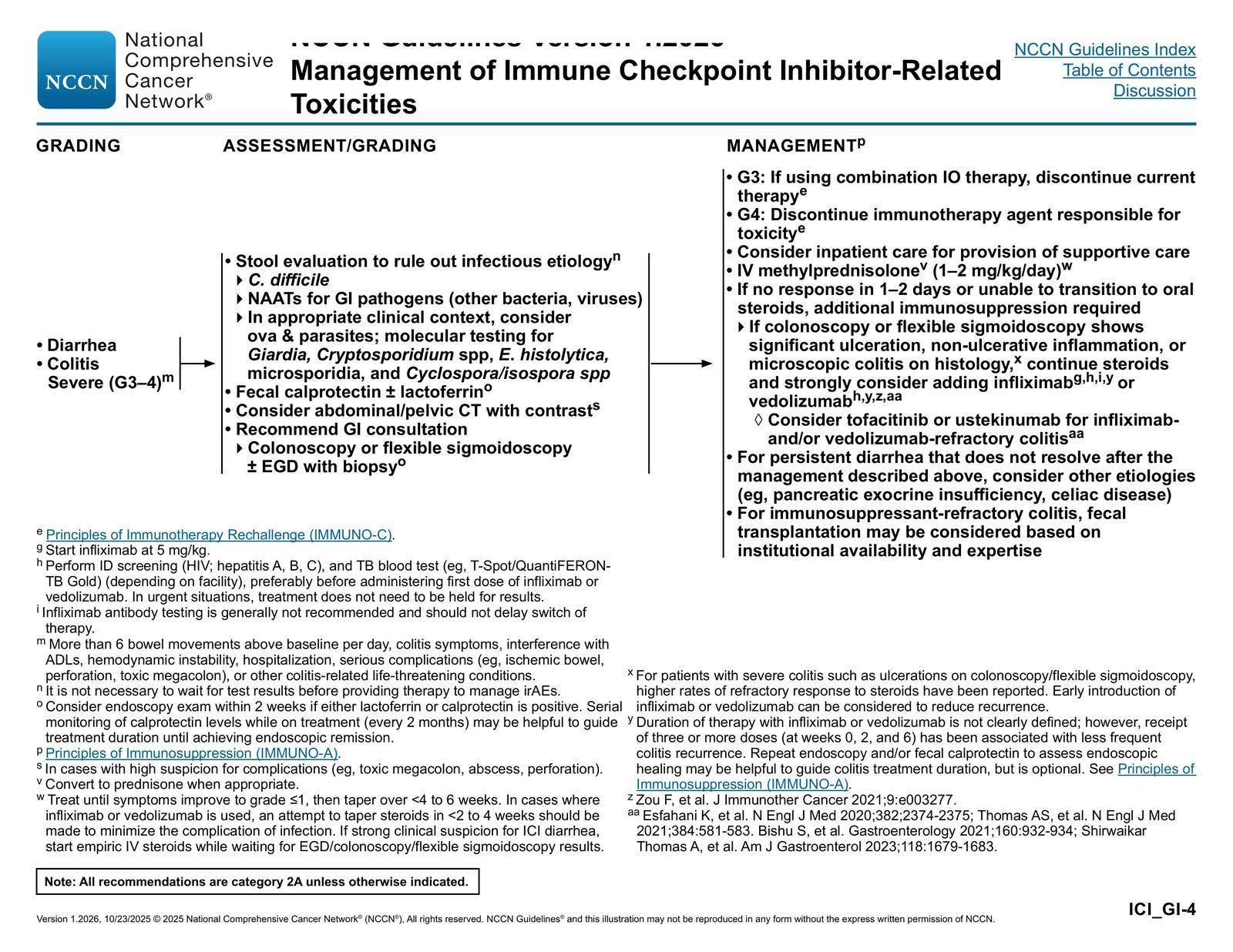
- Management of Diarrhea/Colitis: Severe (G3–4) — NCCN Guidelines® — Management of Immune Checkpoint Inhibitor-Related Toxicities p. 42 (v1.2026)
- NCCN October 22, 2025
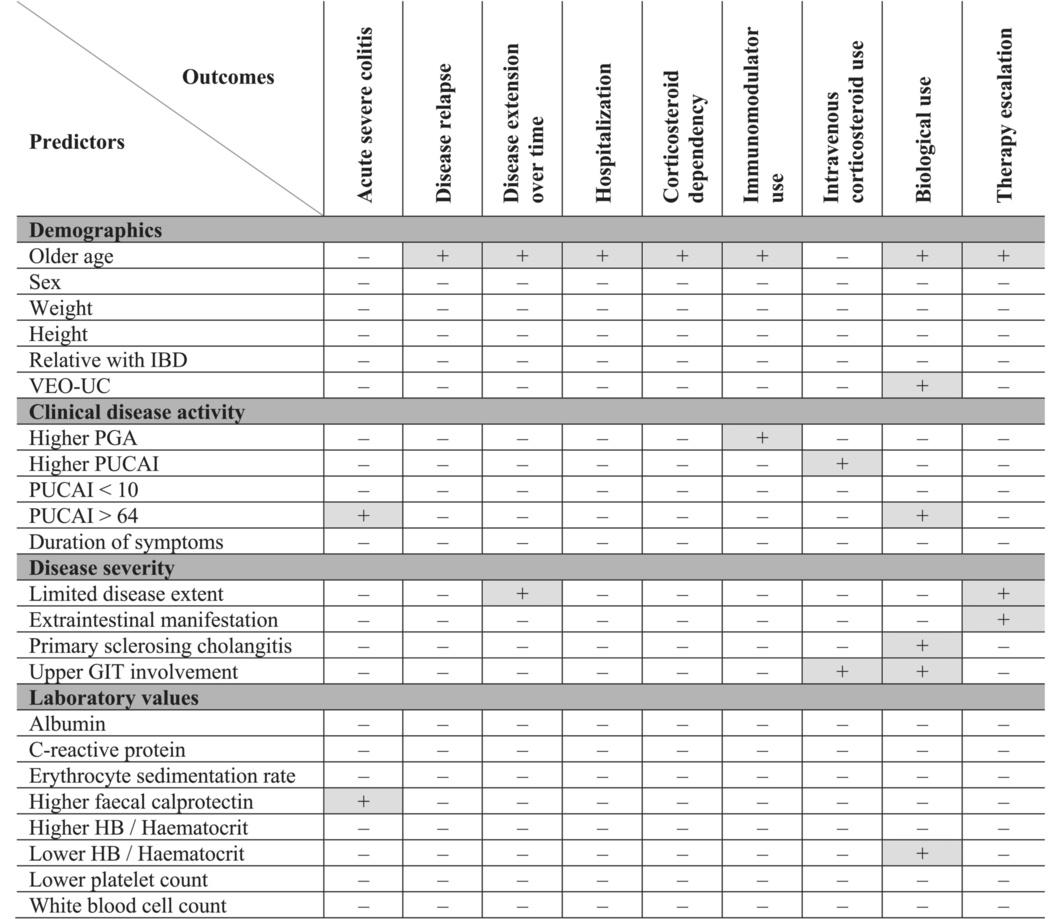
- Overview of disease outcomes and their predictors.
- Alimentary Pharmacology & Therapeutics October 31, 2024
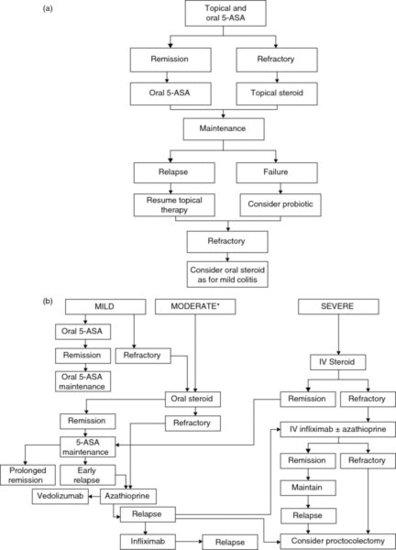
- (a) Algorithm for management of distal ulcerative colitis. (b) Algorithm for management of more extensive ulcerative colitis.
- Evidence‐based Gastroenterology and Hepatology 4e December 31, 2018
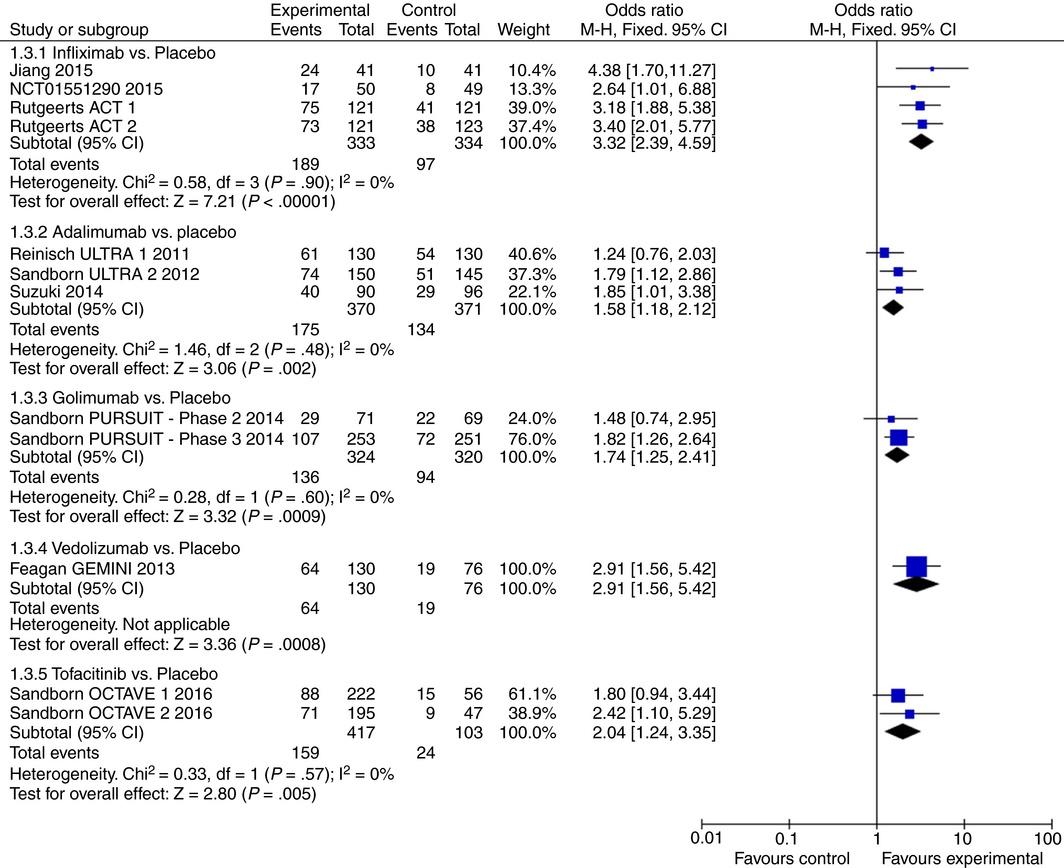
- Efficacy of pharmacological agents in biologic‐naïve patients with moderate‐severe ulcerative colitis for induction of mucosal healing
- Alimentary Pharmacology & Therapeutics December 31, 2017
References
1. Ulcerative Colitis in Adults: A Review. — Gros B, Kaplan GG. The Journal of the American Medical Association. 2023.
2. Ulcerative Colitis. — Le Berre C, Honap S, Peyrin-Biroulet L. Lancet. 2023.
3. ACG Clinical Guideline Update: Ulcerative Colitis in Adults. — Rubin DT, Ananthakrishnan AN, Siegel CA, Barnes EL, Long MD. The American Journal of Gastroenterology. 2025.
4. AGA Clinical Practice Update on Inpatient Management of Adults With Inflammatory Bowel Disease: Expert Review. — Cohen-Mekelburg S, Hashash JG, Loftus EV, Rubin DT. Gastroenterology. 2026.
5. Ulcerative Colitis. — Ungaro R, Mehandru S, Allen PB, Peyrin-Biroulet L, Colombel JF. Lancet. 2017.
6. AGA Clinical Practice Guidelines on the Management of Moderate to Severe Ulcerative Colitis. — Feuerstein JD, Isaacs KL, Schneider Y, et al. Gastroenterology. 2020.
7. Review article: acute severe ulcerative colitis – evidence‐based consensus statements. — Chen JH, Andrews JM, Kariyawasam V, et al. Alimentary Pharmacology & Therapeutics. 2016.
8. ACG Clinical Guideline: Ulcerative Colitis in Adults. — Rubin DT, Ananthakrishnan AN, Siegel CA, Sauer BG, Long MD. The American Journal of Gastroenterology. 2019.
9. Ulcerative Colitis: Rapid Evidence Review. — Adams SM, Close ED, Shreenath AP. American Family Physician. 2022.
10. AGA Clinical Practice Update on Management of Inflammatory Bowel Disease in Elderly Patients: Expert Review. — Ananthakrishnan AN, Nguyen GC, Bernstein CN. Gastroenterology. 2021.
11. FDA Orange Book. — FDA Orange Book. 2026.
12. AGA Clinical Practice Guideline on the Role of Biomarkers for the Management of Ulcerative Colitis. — Singh S, Ananthakrishnan AN, Nguyen NH, et al. Gastroenterology. 2023.
13. AGA Living Clinical Practice Guideline on Pharmacological Management of Moderate-to-Severe Ulcerative Colitis. — Singh S, Loftus EV, Limketkai BN, et al. Gastroenterology. 2024.
14. Recommendations on the Appropriate Management of Steroids and Discharge Planning During and After Hospital Admission for Moderate-Severe Ulcerative Colitis: Results of a RAND Appropriateness Panel. — Dulai PS, Rai V, Raffals LE, et al. The American Journal of Gastroenterology. 2022.
Figures
More from Deep Dive
Reviewed by Dr. Lucas Mastropaolo. SymptomDx is an educational tool for medical professionals — it does not replace clinical judgment. Verify all clinical data and drug dosages with authoritative sources.