Urosepsis
Urosepsis is sepsis originating from a urogenital tract infection, accounting for 9–31% of all sepsis cases, with a mortality of 20–40%.[1] Approximately 80% of cases are due to obstructive uropathy, with ureterolithiasis being the most common cause.[1-2] The following is a comprehensive clinical summary organized for emergency medicine and primary care workflows.
History
- Key HPI questions: Onset and duration of urinary symptoms (dysuria, frequency, urgency, hematuria), flank/back pain, fever/chills/rigors, nausea/vomiting, prior UTIs or urologic procedures
- Symptom characterization: Fever is often high-grade with rigors; flank pain localizes to the upper tract; lower urinary symptoms may or may not be present[3]
- Timing/triggers: Recent urologic instrumentation (cystoscopy, stent placement, PCNL), recent catheterization, recent hospitalization or antibiotic use[2-3]
- Severity/progression: Rapid deterioration from seemingly innocuous UTI symptoms to septic shock can occur within hours[4]
- Associated symptoms: Confusion/altered mental status, oliguria, dyspnea, abdominal pain
- Important negatives: Absence of flank pain does not exclude upper tract source; elderly and immunocompromised patients may present without fever[5]
Alarm Features
- Hemodynamic instability: SBP ≤100 mmHg, MAP <65 mmHg, tachycardia
- Altered mental status (GCS <15)[4]
- Respiratory distress: RR ≥22, SpO2 <94%
- Lactate ≥2 mmol/L — defines septic shock when combined with vasopressor requirement[4][6]
- Oliguria/anuria — suggests obstructive uropathy or AKI
- Rigors with high fever (>39°C) or hypothermia (<36°C)
- Signs of DIC: petechiae, oozing from IV sites, thrombocytopenia[7]
- Pyonephrosis or emphysematous pyelonephritis on imaging — surgical emergency[3]
Medications
- Empiric IV antibiotics (administer within 1 hour for septic shock, within 3 hours for sepsis without shock):[6]
- First-line empiric options (per IDSA 2025 cUTI guidelines): IV ceftriaxone, piperacillin-tazobactam, or a fluoroquinolone, guided by a 4-step approach: (1) severity of illness, (2) risk factors for resistance, (3) patient-specific considerations, (4) local antibiogram[8]
- If ESBL risk or critically ill: Carbapenems (meropenem 1g IV q8h, ertapenem 1g IV q24h) are preferred[9-10]
- If Enterococcus suspected (indwelling catheter, prior cultures): Add ampicillin or vancomycin
- Avoid: Nitrofurantoin and oral fosfomycin (inadequate tissue/serum levels for systemic infection)[3]
- De-escalate once culture and susceptibility data are available; transition to oral therapy when clinically improving, able to tolerate PO, and an effective oral option exists[11]
- Medications that increase UTI/urosepsis risk: Immunosuppressants, chronic corticosteroids, anticholinergics (urinary retention)
Diet
- Acute phase: NPO if hemodynamically unstable or if urologic intervention anticipated
- Hydration: Aggressive IV fluid resuscitation is the priority; oral hydration once stabilized
- Long-term: Adequate fluid intake (≥2L/day) to reduce recurrent UTI/stone risk; dietary modifications based on stone composition if urolithiasis is the underlying cause
Review of Systems
- GU: Dysuria, frequency, urgency, hematuria, flank pain, suprapubic pain, urinary retention, penile/vaginal discharge
- Constitutional: Fever, chills, rigors, malaise, night sweats
- GI: Nausea, vomiting, diarrhea, abdominal pain (may mimic intra-abdominal pathology)
- Neurologic: Confusion, lethargy, delirium (especially elderly)
- Respiratory: Dyspnea, tachypnea (may indicate ARDS or metabolic acidosis compensation)
- Skin: Mottling, delayed capillary refill, petechiae
Collateral History and Family History
- Collateral: Prior urine culture results and susceptibilities (critical for guiding empiric therapy), recent antibiotic use, recent urologic procedures, baseline mental status, functional status, indwelling devices (Foley, nephrostomy, ureteral stent)[8]
- Family history: Generally not a major factor; however, family history of urolithiasis or polycystic kidney disease may be relevant
- Social context: Nursing home residence (higher MDR risk), ability to comply with outpatient follow-up
Risk Factors
- Obstructive uropathy (urolithiasis, BPH, strictures, tumors) — present in ~80% of cases[1-2]
- Urinary catheterization (indwelling or intermittent)[12]
- Diabetes mellitus — 43% higher culture-positive rate[12-13]
- Immunosuppression (transplant, chemotherapy, HIV)
- Chronic kidney disease[12]
- Female sex (higher culture-positive rate in stone-associated urosepsis)[13]
- Advanced age (>65 years)[12]
- Recent urologic instrumentation (cystoscopy, PCNL, TURP, stent exchange)[2]
- Prior antibiotic exposure and healthcare contact (increased MDR risk)[5]
- Structural urinary tract abnormalities (neurogenic bladder, vesicoureteral reflux)
Differential Diagnosis
- Pyelonephritis without sepsis — fever + flank pain + pyuria but no organ dysfunction
- Nephrolithiasis (uncomplicated) — colicky flank pain, hematuria, no systemic toxicity
- Intra-abdominal pathology: Acute cholecystitis, appendicitis, diverticulitis, ruptured AAA[3]
- Pelvic inflammatory disease (in women)
- Prostatitis/prostatic abscess (in men)[14]
- Renal abscess or perinephric abscess
- Emphysematous pyelonephritis — a surgical emergency; gas on imaging
- Sepsis from another source with incidental bacteriuria (especially in elderly with asymptomatic bacteriuria)
- Renal vein thrombosis
Past Medical History
- Prior UTIs, pyelonephritis, or urosepsis episodes
- History of urolithiasis, BPH, urologic surgery
- Diabetes, CKD, immunosuppression
- Indwelling urinary devices (current or recent)
- Prior urine culture organisms and susceptibilities — the single most useful piece of data for guiding empiric therapy[8]
- Antibiotic allergies (especially beta-lactam, fluoroquinolone)
Physical Exam
- Vitals: Temperature (fever >38°C or hypothermia <36°C), HR (tachycardia >90), RR (tachypnea ≥22), BP (hypotension SBP ≤100), SpO2
- General: Toxic appearance, rigors, diaphoresis, altered mental status
- Abdomen: Suprapubic tenderness, distended bladder (retention)
- Flank: CVA tenderness — hallmark of upper tract involvement[3][15]
- GU: Examine for phimosis, urethral discharge, scrotal pathology (epididymitis/orchitis), vaginal discharge
- Rectal (men): Prostate tenderness/boggy prostate (prostatitis/abscess)
- Skin: Mottling, petechiae, delayed capillary refill (>3 seconds), check catheter sites
- Extremities: Peripheral perfusion, edema
Lab Studies
- CBC with differential: Leukocytosis (>12,000) or leukopenia (<4,000), bandemia, thrombocytopenia[5]
- BMP/CMP: Creatinine (AKI), BUN, electrolytes (hyperkalemia in AKI), glucose (hyperglycemia common in sepsis)
- Lactate: ≥2 mmol/L associated with tissue hypoperfusion; serial lactate to guide resuscitation[6]
- Procalcitonin: Elevated in bacterial sepsis; useful for risk stratification (≥0.5 ng/mL suggests systemic infection)[16-17]
- CRP: Elevated; nonspecific but useful for trending
- Coagulation studies: PT/INR, fibrinogen, D-dimer (DIC screening)[16]
- LFTs: Elevated aminotransferases in sepsis-related organ dysfunction[7]
- Blood cultures: 2 sets (aerobic + anaerobic) from separate sites before antibiotics[18]
- Urinalysis + urine culture: Pyuria, bacteriuria, nitrites; culture for organism identification and susceptibilities[18-19]
- Blood gas (VBG/ABG): Metabolic acidosis, lactate
Imaging
- First-line: Renal/bladder ultrasound — rapid, bedside, identifies hydronephrosis, pyonephrosis, bladder distension, renal abscess[1][14]
- Gold standard: CT abdomen/pelvis with contrast — indicated for sepsis, suspected obstruction, abscess, emphysematous pyelonephritis, or failure to improve[3][18]
- Key findings: Hydronephrosis, perinephric stranding, ureteral calculi, gas within renal parenchyma (emphysematous pyelonephritis), abscess
- When imaging is unnecessary: Uncomplicated pyelonephritis in a young, otherwise healthy patient responding to antibiotics[3]
- CT KUB (non-contrast): Adequate for stone detection but misses abscess and soft tissue detail
Special Tests
Scoring systems
- SOFA score (≥2 points = sepsis) — the standard for defining sepsis per Sepsis-3[4][8]
- qSOFA (≥2 of: altered mentation, SBP ≤100, RR ≥22) — screening tool, but the Surviving Sepsis Campaign 2026 guidelines recommend NEWS, NEWS2, MEWS, or SIRS over qSOFA as a single screening tool[20]
- Point-of-care ultrasound (POCUS): Assess for hydronephrosis, IVC collapsibility (volume status), cardiac function
- Bladder scan: Post-void residual to assess for urinary retention
- Urine Gram stain: Rapid identification of gram-negative vs. gram-positive organisms to guide initial therapy
ECG
- Indications: All septic patients, especially those with tachycardia, hypotension, chest pain, or elderly patients
Common findings in sepsis
- Sinus tachycardia (39% of sepsis patients)[21]
- QT prolongation (54% of sepsis patients) — associated with poor outcomes[21]
- Atrial fibrillation/flutter (8.8%) — new-onset AF associated with 2.2× higher odds of poor outcomes[21]
- ST changes — may mimic ACS; sepsis-related myocardial dysfunction can cause ST elevation with reciprocal changes even without coronary occlusion[22]
- Decreased QRS amplitude in septic shock[23]
- Electrolyte-related changes: Hyperkalemia (peaked T waves, widened QRS) in AKI; hypokalemia (U waves, ST depression) from fluid resuscitation[24-25]
Assessment
Severity stratification (per Sepsis-3 definitions)
- Sepsis: Suspected UTI + SOFA ≥2 (life-threatening organ dysfunction)
- Septic shock: Sepsis + vasopressor requirement to maintain MAP ≥65 mmHg + lactate >2 mmol/L despite adequate fluid resuscitation
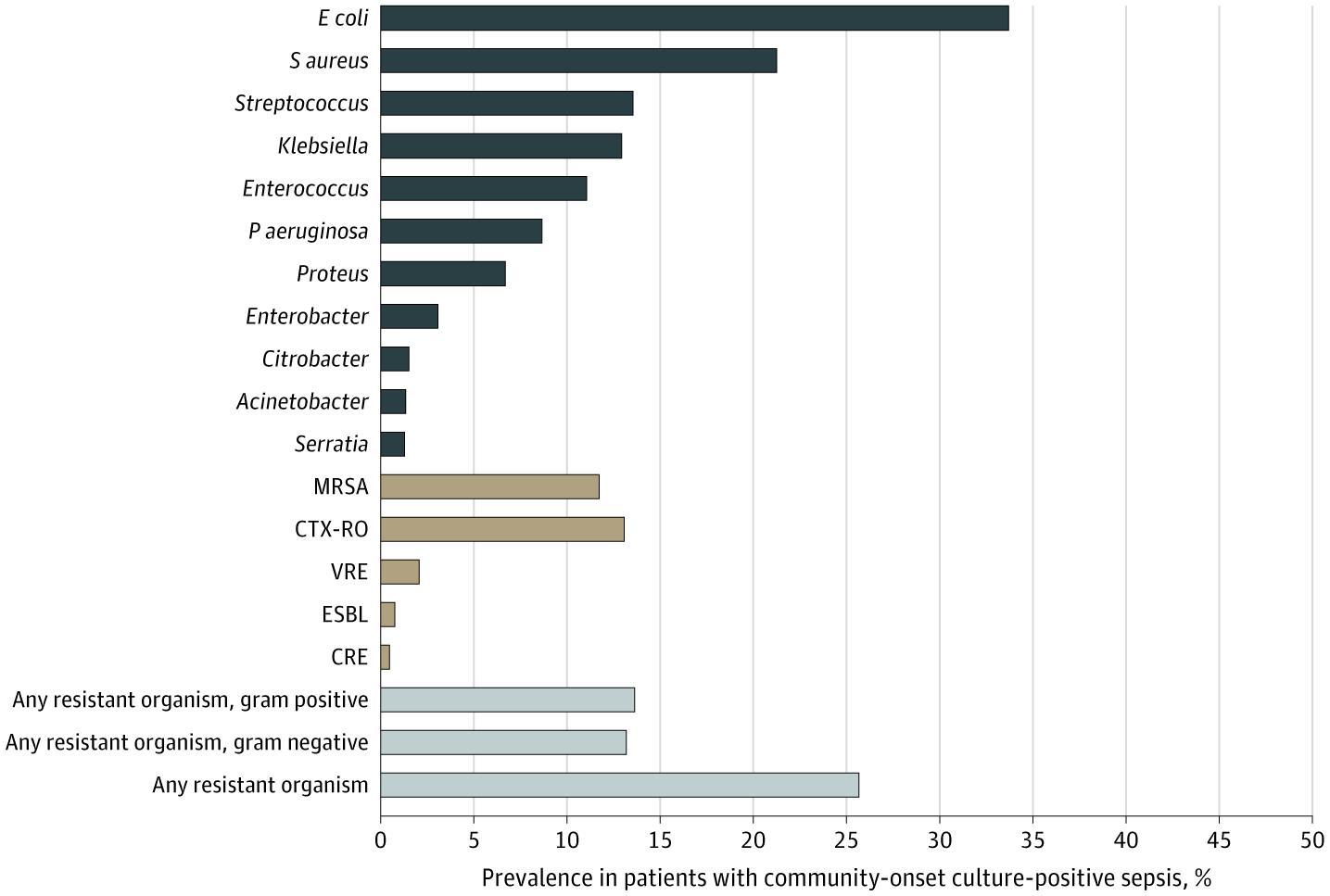
- Typical presentation: Elderly patient with obstructive uropathy (stone, BPH) presenting with fever, rigors, flank pain, and hemodynamic instability. E. coli is the causative organism in ~50–65% of cases.[4][13]
- Atypical presentations: Elderly or immunocompromised patients may present with confusion, hypothermia, or nonspecific decline without localizing urinary symptoms.[5]
- Complications: AKI, ARDS, DIC, septic shock, multi-organ failure, septic cardiomyopathy, critical illness polyneuropathy.[7]
Treatment Plan
Initial stabilization (Hour-1 Bundle)
- IV access (2 large-bore IVs), continuous monitoring
- Fluid resuscitation: Balanced crystalloid (LR preferred), 500–2,000 mL (up to ~30 mL/kg) for hypotension/hypoperfusion; reassess frequently with dynamic measures[6][18]
- Blood cultures × 2 sets + urine culture before antibiotics[18]
- Lactate measurement[6]
- Empiric IV antibiotics within 1 hour if septic shock, within 3 hours if sepsis without shock[6]
Antibiotic selection (IDSA 2025 four-step approach)
- Non-septic, low risk for resistance: Ceftriaxone 2g IV q24h or fluoroquinolone
- Septic, no MDR risk factors: Piperacillin-tazobactam 4.5g IV q6h or cefepime 2g IV q8h
- Septic with MDR risk factors (prior ESBL, recent antibiotics, healthcare exposure): Meropenem 1g IV q8h[9-10]
- Enterococcal coverage if indicated: Add ampicillin 2g IV q4h or vancomycin
Vasopressors
- Norepinephrine is first-line if hypotension persists after initial fluid resuscitation; target MAP ≥65 mmHg[6][18]
- May be started via peripheral IV or IO without central access[18]
Source control — CRITICAL in urosepsis
- Obstructing stone with infection: Urgent decompression via percutaneous nephrostomy (PCN) or retrograde ureteral stent (RUS) — both are effective; choice depends on clinical scenario and available expertise[26][28-29]
- PCN may be preferred in pyonephrosis or when larger drainage is needed[28][30]
- Definitive stone treatment should be deferred until sepsis resolves[26]
- Infected indwelling catheter: Remove and replace if needed[18]
- Abscess: Percutaneous or surgical drainage
- IV-to-oral transition: Once clinically improving, tolerating PO, and an effective oral option is available (fluoroquinolone, TMP-SMX, or oral cephalosporin based on susceptibilities)[11]
- Duration: Typically 7–14 days depending on source control and clinical response; shorter courses (7 days) are increasingly favored when source control is adequate[5]
Disposition
- Admission criteria (most urosepsis patients require admission):
- Sepsis or septic shock (ICU admission within 6 hours if ICU-level care needed)[6][20]
- Hemodynamic instability or vasopressor requirement → ICU
- Obstructive uropathy requiring urgent intervention
- Inability to tolerate oral medications (persistent vomiting)
- Significant comorbidities (CKD, immunosuppression, diabetes with poor control)
- AKI, multi-organ dysfunction
Observation indications
- Moderate illness without shock, responding to initial IV fluids and antibiotics, pending imaging results
- Discharge criteria (rare in true urosepsis; more applicable to uncomplicated pyelonephritis):
- Hemodynamically stable, afebrile, tolerating PO, no obstruction, reliable follow-up[3]
Specialist consultation triggers
- Urology: All cases with obstructive uropathy, stones, abscess, emphysematous pyelonephritis, or need for source control[27]
- Interventional radiology: PCN placement if urology unavailable or antegrade approach preferred[30]
- Infectious disease: MDR organisms, failure to improve on empiric therapy, immunocompromised host
- Critical care/ICU: Septic shock, vasopressor requirement, multi-organ dysfunction
Follow Up / Return Precautions
- Follow-up timing: PCP or urology within 1–2 weeks of discharge; earlier if persistent symptoms
- Repeat urine culture: Consider test of cure in complicated cases or if structural abnormality persists
- Definitive stone management: Schedule after infection clears (typically 4–6 weeks) if urolithiasis was the cause[26]
- Review culture susceptibilities and narrow/adjust oral antibiotics accordingly
- Return precautions — instruct patients to return immediately for:
- Recurrent fever, rigors, or chills
- Worsening flank or abdominal pain
- Decreased urine output or inability to urinate
- Confusion, lightheadedness, or feeling faint
- Persistent vomiting or inability to take medications
- Blood in urine (new or worsening)
- Expected recovery: With appropriate antibiotics and source control, clinical improvement is typically seen within 48–72 hours. Failure to improve should prompt re-imaging for undrained collection, reassessment of antibiotic coverage, and consideration of alternative diagnoses.[1][27]
- Relevant images 4 items
- Prevalence of Pathogens in Culture-Positive Community-Onset Sepsis
- JAMA Netw Open March 31, 2020
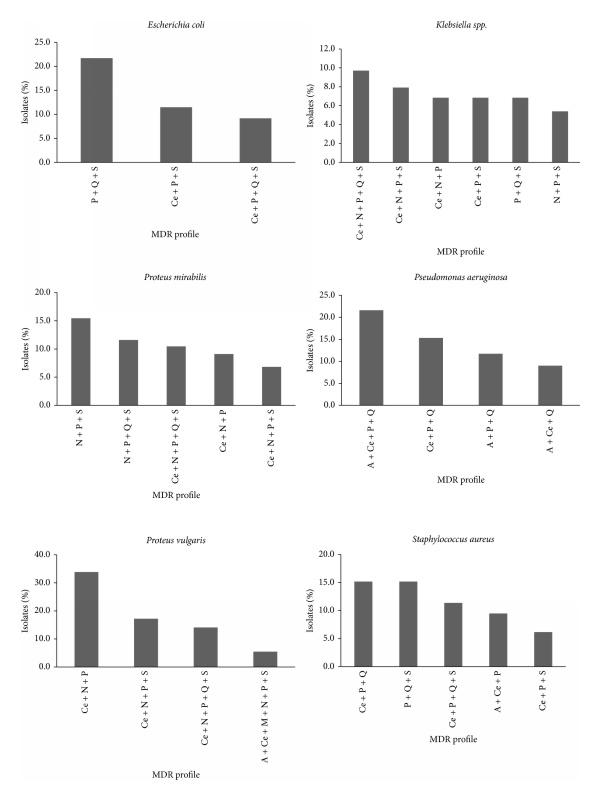
- Variation of the MDR profiles in the main bacteria implicated in UTI during the study period.
- BioMed Research International January 14, 2015
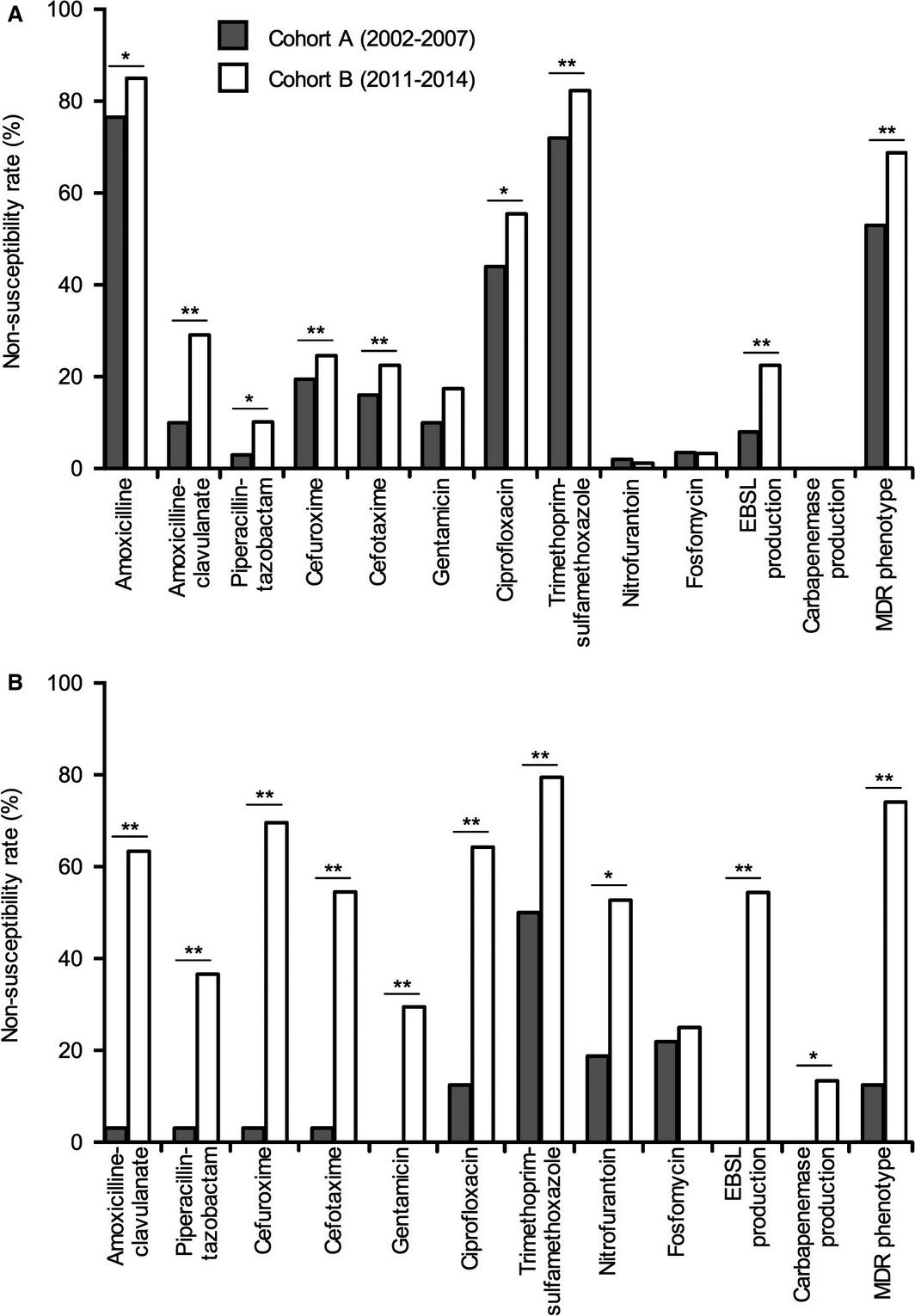
- Non‐susceptibility rates to specific agents and proportion of ESBL ‐producing, carbapenemase‐producing, and MDR isolates in (A) E scherichia coli and (B) K lebsiella pneumoniae according to study cohort.
- Transplant Infectious Disease July 31, 2016
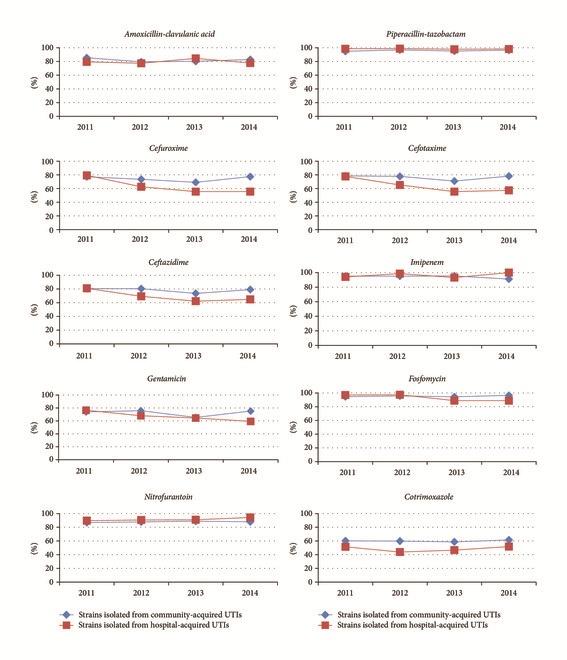
- Activity (in %) of the different antibiotics against all bacteria isolated in urine samples during 2011–2014.
- BioMed Research International January 15, 2017
References
1. Urosepsis--Etiology, Diagnosis, and Treatment. — Dreger NM, Degener S, Ahmad-Nejad P, Wöbker G, Roth S. Deutsches Arzteblatt International. 2015.
2. Urosepsis: Overview of the Diagnostic and Treatment Challenges. — Wagenlehner FME, Pilatz A, Weidner W, Naber KG. Microbiology Spectrum. 2015.
3. Acute Pyelonephritis in Adults. — Johnson JR, Russo TA. The New England Journal of Medicine. 2018.
4. Clinical Situations of Bacteriology and Prognosis in Patients with Urosepsis. — Jiang Y, Li J, Zhang Y, et al. BioMed Research International. 2018.
5. Sepsis and Septic Shock. — Meyer NJ, Prescott HC. The New England Journal of Medicine. 2024.
6. Surviving Sepsis Campaign: International Guidelines for Management of Sepsis and Septic Shock 2021. — Evans L, Rhodes A, Alhazzani W, et al. Critical Care Medicine. 2021.
7. Severe Sepsis and Septic Shock. — Angus DC, van der Poll T. The New England Journal of Medicine. 2013.
8. Clinical Practice Guideline by Infectious Diseases Society of America (IDSA): 2025 Guideline on Management and Treatment of Complicated Urinary Tract Infections: Selection of Antibiotic Therapy for Complicated UTI. — Barbara W. Trautner, Nicolás W. Cortés-Penfield, Kalpana Gupta, et al Infectious Diseases Society of America. 2025.
9. Infectious Diseases Society of America 2023 Guidance on the Treatment of Antimicrobial Resistant Gram-Negative Infections. — Tamma PD, Aitken SL, Bonomo RA, et al. Clinical Infectious Diseases : An Official Publication of the Infectious Diseases Society of America. 2023.
10. Infectious Diseases Society of America 2024 Guidance on the Treatment of Antimicrobial-Resistant Gram-Negative Infections. — Tamma PD, Heil EL, Justo JA, et al. Clinical Infectious Diseases : An Official Publication of the Infectious Diseases Society of America. 2024.
11. Clinical Practice Guideline by Infectious Diseases Society of America (IDSA): 2025 Guideline on Management and Treatment of Complicated Urinary Tract Infections: Timing of Intravenous to Oral Antibiotics Transition for Complicated UTI. — Barbara W. Trautner, Nicolás W. Cortés-Penfield, Kalpana Gupta, et al Infectious Diseases Society of America. 2025.
12. Risk Factors for Urosepsis in Chronic Kidney Disease Patients With Urinary Tract Infections. — Dimitrijevic Z, Paunovic G, Tasic D, Mitic B, Basic D. Scientific Reports. 2021.
13. Pathogen Distribution and Antibiotic Sensitivity Analysis in Urosepsis Associated With Urinary Stones: A Retrospective Observational Study. — Hu Y, Wang X, Chen Y, et al. Medicine. 2025.
14. Urinary Tract Infections in Older Men. — Schaeffer AJ, Nicolle LE. The New England Journal of Medicine. 2016.
15. Urinary Tract Infections in Pregnant Individuals. — Committee on Clinical Consensus—Obstetrics Obstetrics and Gynecology. 2023.
16. Explainable Machine Learning With Routine Biomarkers Identifies Culture-Defined Bacteremic Urosepsis. — Zhang YL, Yu DX, Zheng YY, et al. Scientific Reports. 2026.
17. A Reference Standard for Urinary Tract Infection Research: A Multidisciplinary Delphi Consensus Study. — Bilsen MP, Conroy SP, Schneeberger C, et al. The Lancet. Infectious Diseases. 2024.
18. Early Care of Adults With Suspected Sepsis in The Emergency Department and Out-of-Hospital Environment: A Consensus-Based Task Force Report. — Yealy DM, Mohr NM, Shapiro NI, et al. Annals of Emergency Medicine. 2021.
19. Guide to Utilization of the Microbiology Laboratory for Diagnosis of Infectious Diseases: 2024 Update by the Infectious Diseases Society of America (IDSA) and the American Society for Microbiology (ASM). — Miller JM, Binnicker MJ, Campbell S, et al. Clinical Infectious Diseases : An Official Publication of the Infectious Diseases Society of America. 2024.
20. Surviving Sepsis Campaign: International Guidelines for Management of Sepsis and Septic Shock 2026. — Prescott HC, Antonelli M, Alhazzani W, et al. Critical Care Medicine. 2026.
21. Association of Electrocardiogram Abnormalities With Clinical Outcomes in Emergency Department Sepsis Patients. — Kotruchin P, Chuehongthong M, Tangpaisarn T, et al. The Western Journal of Emergency Medicine. 2026.
22. Emphysematous Pyelonephritis With ST Elevation Accompanied by Reciprocal Changes Mimicking Acute Coronary Syndrome. — Hatakeyama K, Shono Y, Hashimoto T, et al. The American Journal of Emergency Medicine. 2023.
23. ECG Changes During Septic Shock. — Rich MM, McGarvey ML, Teener JW, Frame LH. Cardiology. 2002.
24. Update to Practice Standards for Electrocardiographic Monitoring in Hospital Settings: A Scientific Statement From the American Heart Association. — Sandau KE, Funk M, Auerbach A, et al. Circulation. 2017.
25. Electrocardiographic Manifestations: Electrolyte Abnormalities. — Diercks DB, Shumaik GM, Harrigan RA, Brady WJ, Chan TC. The Journal of Emergency Medicine. 2004.
26. 2007 Guideline for the Management of Ureteral Calculi. — Preminger GM, Tiselius HG, Assimos DG, et al. The Journal of Urology. 2007.
27. Diagnosis and Management for Urosepsis. — Wagenlehner FM, Lichtenstern C, Rolfes C, et al. International Journal of Urology : Official Journal of the Japanese Urological Association. 2013.
28. Percutaneous Nephrostomy Versus Retrograde Ureteral Stent for Acute Upper Urinary Tract Obstruction With Urosepsis. — Xu ZH, Yang YH, Zhou S, Lv JL. Journal of Infection and Chemotherapy : Official Journal of the Japan Society of Chemotherapy. 2021.
29. Choosing the Best Way for Urinary Decompression and Developing a Novel Predictive Model for Septic Shock Using SOFA in These Patients. — Law YXT, Shen L, Khor VWS, et al. International Journal of Urology : Official Journal of the Japanese Urological Association. 2022.
30. CIRSE Standards of Practice on Nephrostomy and Ureteric Stent Placement and Exchange. — Ryan AG, Irvine I, Bardgett H, et al. Cardiovascular and Interventional Radiology. 2026.
Figures
More from Deep Dive
Reviewed by Dr. Lucas Mastropaolo. SymptomDx is an educational tool for medical professionals — it does not replace clinical judgment. Verify all clinical data and drug dosages with authoritative sources.