Beta-Blocker Toxicity
Beta-blocker toxicity is a life-threatening poisoning emergency characterized by the classic triad of bradycardia, hypotension, and hypoglycemia, resulting from direct antagonism of β-adrenergic receptors. Certain agents carry unique risks: propranolol (sodium channel blockade → seizures, wide QRS, ventricular dysrhythmias), sotalol (potassium channel blockade → QT prolongation, torsades de pointes), and labetalol/carvedilol (α₁-antagonism → vasodilatory shock). [1-3]
History
- Agent, dose, formulation (immediate-release vs. sustained-release — SR formulations can delay peak toxicity by several hours) [4]
- Time of ingestion — critical for decontamination decisions and anticipating clinical trajectory
- Intentional vs. accidental — suicidal intent, access to other medications
- Co-ingestants — calcium channel blockers, other antihypertensives, sedatives, alcohol significantly worsen outcomes [5]
- Symptoms: dizziness, lightheadedness, syncope, dyspnea, wheezing, altered mentation, seizures
- Progression: rapid deterioration possible, especially with propranolol or sotalol [1][3]
Alarm Features
- Hemodynamic instability: SBP <90 mmHg, HR <50 bpm refractory to atropine
- Altered mental status / coma — suggests severe toxicity or CNS-penetrating agent (propranolol) [3][6]
- Seizures — hallmark of propranolol toxicity from sodium channel blockade [1]
- Wide QRS complex (>120 ms) — propranolol; signals impending ventricular dysrhythmia [3]
- QT prolongation — sotalol; risk of torsades de pointes [2]
- Cardiogenic shock / cardiac arrest — refractory to standard vasopressors [7]
- Bronchospasm — particularly in patients with reactive airway disease [8]
- Hypoglycemia — especially in children and diabetic patients [1]
Medications
Treatments (graduated approach per AHA 2025 Guidelines): [1-2]
Medications to avoid
- Intravenous lipid emulsion (ILE) — expert consensus advises against routine use; reports of abrupt cardiac arrest after administration in oral β-blocker overdose [1-2]
- Atropine in heart transplant patients — can cause paradoxical heart block or sinus arrest [9]
Diet
- NPO if hemodynamically unstable or airway compromise anticipated
- Dextrose supplementation is essential when using high-dose insulin therapy — D10W infusion to prevent hypoglycemia [1][9]
- No specific dietary triggers; not applicable in the acute setting
Review of Systems
- Cardiovascular: chest pain, palpitations, syncope, presyncope
- Neurologic: altered mentation, seizures, drowsiness, coma
- Respiratory: dyspnea, wheezing, bronchospasm
- GI: nausea, vomiting
- Endocrine: symptoms of hypoglycemia (diaphoresis, tremor, confusion — may be masked by β-blockade)
- Psychiatric: suicidal ideation assessment if intentional ingestion
Collateral History and Family History
- Collateral from EMS, family, pharmacy: confirm agent, dose, timing, pill count, access to other medications
- Suicide note or prior attempts — psychiatric risk stratification
- Medication list — co-prescribed CCBs, digoxin, clonidine, or other AV-nodal blocking agents dramatically increase risk [5]
- Family history is generally not relevant in the acute toxicologic setting
Risk Factors
- Intentional overdose — higher doses, co-ingestants, delayed presentation
- Sustained-release formulations — delayed and prolonged toxicity [4]
- Specific agents: propranolol and sotalol carry highest morbidity/mortality due to additional channel-blocking properties [1][3]
- Co-ingestion with CCBs, other antihypertensives, sedatives, or alcohol [5]
- Underlying cardiac disease — pre-existing conduction abnormalities, heart failure
- Renal impairment — impaired clearance of water-soluble agents (atenolol, sotalol, nadolol) [1]
- Pediatric patients — more susceptible to hypoglycemia, though severe toxicity from unintentional single-pill exposure in children <6 years is uncommon [1]
Differential Diagnosis
- Calcium channel blocker overdose — similar presentation (bradycardia + hypotension); CCB toxicity more often causes hyperglycemia (vs. hypoglycemia in BB toxicity); may have more prominent vasodilatory shock [2-3]
- Digoxin toxicity — bradycardia, AV block, but classically with hyperkalemia and characteristic dysrhythmias (bidirectional VT, regularized atrial fibrillation)
- Clonidine / central α₂-agonist overdose — bradycardia, hypotension, miosis, CNS depression
- Organophosphate poisoning — bradycardia with cholinergic toxidrome (SLUDGE/DUMBELS)
- Acute MI / cardiogenic shock — bradycardia and hypotension from non-toxicologic cause
- Hyperkalemia — bradycardia, conduction delays
- Hypothyroidism / myxedema coma — bradycardia, hypotension, altered mentation
Key distinguishing feature: Hypoglycemia in the setting of bradycardia + hypotension strongly favors β-blocker over CCB toxicity. [2-3]
Past Medical History
- Prior overdose attempts or psychiatric history
- Baseline cardiac conduction disease (sick sinus syndrome, AV block)
- Heart failure — prone to significant hemodynamic instability [7]
- Reactive airway disease / COPD — increased bronchospasm risk
- Diabetes — baseline hypoglycemia risk, β-blockade masks tachycardic response
- Renal/hepatic impairment — affects drug clearance
Physical Exam
- Vitals: Bradycardia (often <50 bpm), hypotension (SBP <90), may have hypothermia
- Cardiovascular: Diminished heart sounds, S3 gallop if CHF, JVD
- Neurologic: Altered mental status ranging from lethargy to coma; seizures (propranolol); miosis possible
- Respiratory: Wheezing/bronchospasm, respiratory depression in severe cases
- Skin: Cool, clammy, diaphoretic (though diaphoresis may be blunted)
- Capillary refill: Prolonged — indicator of poor perfusion
- Point-of-care glucose: Check immediately — hypoglycemia is common and treatable [2][8]
Lab Studies
- Point-of-care glucose — hypoglycemia is common and must be treated immediately [2]
- BMP — electrolytes (K⁺, Ca²⁺, Mg²⁺), renal function, glucose
- Lactate — marker of end-organ hypoperfusion [3]
- VBG/ABG — assess for metabolic acidosis
- Troponin — evaluate for myocardial injury
- Acetaminophen, salicylate, ethanol levels — rule out co-ingestants [3]
- Digoxin level — if on digoxin or if digoxin toxicity is in the differential
- Serial glucose and potassium — mandatory during high-dose insulin therapy (q15–30 min initially) [1]
- Beta-blocker serum levels are generally not clinically useful and not widely available
Imaging
- Chest X-ray — evaluate for pulmonary edema / cardiogenic shock
- Bedside echocardiography (POCUS) — assess LV function, guide inotropic therapy; can differentiate cardiogenic vs. vasodilatory shock [4]
- CT head — if altered mental status or seizures with unclear etiology
- Advanced imaging is generally unnecessary; diagnosis is clinical
Special Tests
- Bedside echocardiography — most valuable adjunct; guides hemodynamic management (cardiogenic vs. distributive shock) [4]
- Activated charcoal — consider if presentation within 1–2 hours of ingestion and airway is protected; whole-bowel irrigation may be considered for sustained-release formulations [4][9]
- Poison Control Center consultation — recommended for all significant ingestions
- Toxicology consultation — for refractory cases or unclear ingestions
ECG
ECG is essential and should be obtained immediately and repeated serially. [3][9]
- Sinus bradycardia — most common finding
- First-, second-, or third-degree AV block — from AV nodal suppression
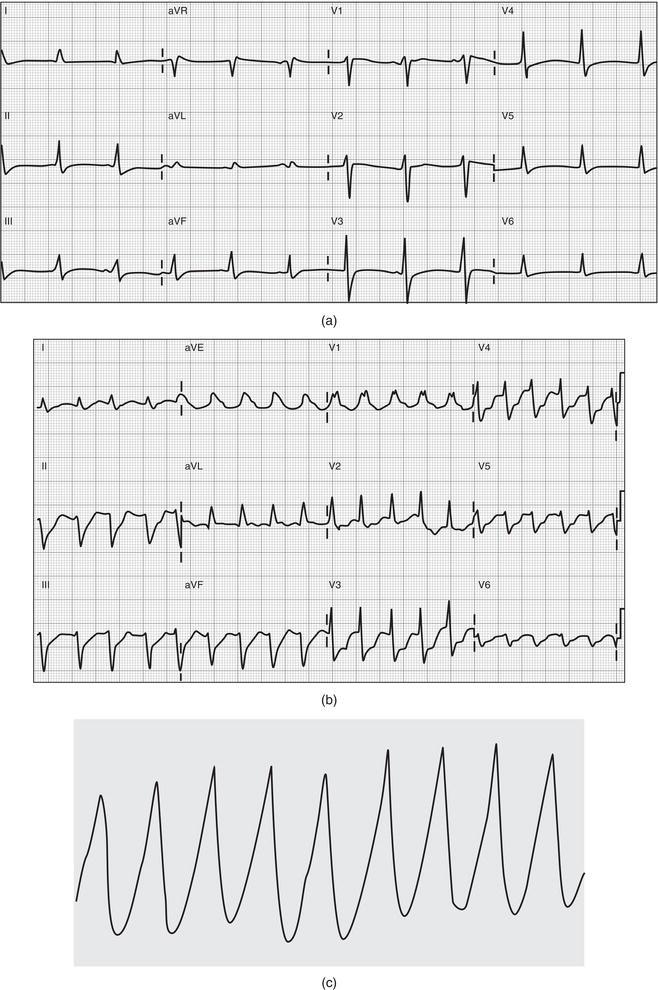
- QRS widening (>120 ms) — propranolol (sodium channel blockade); treat with sodium bicarbonate [1][3]
- QT prolongation — sotalol (potassium channel blockade); risk of torsades de pointes [2][9]
- Junctional or idioventricular escape rhythms — in severe toxicity
- Ventricular tachycardia / ventricular fibrillation — terminal event
The following figure illustrates the progressive ECG changes seen with sodium channel blocker toxicity, relevant to propranolol overdose:
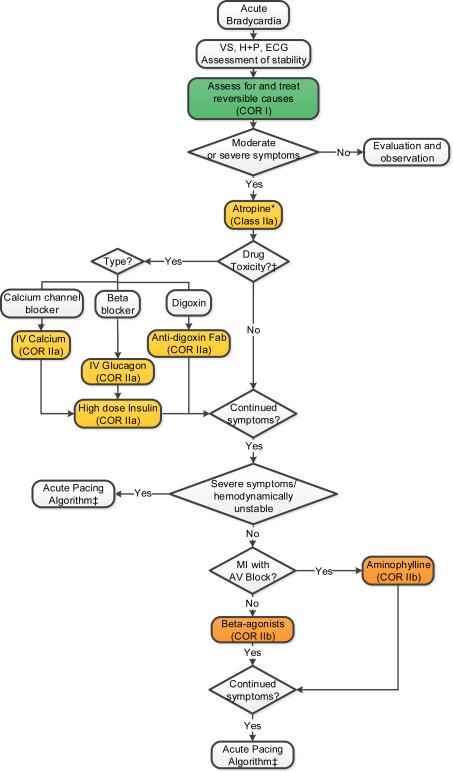
The ACC/AHA/HRS Acute Bradycardia Algorithm provides a structured approach to managing drug-induced bradycardia:
Assessment
Beta-blocker toxicity is a clinical diagnosis based on history of exposure plus the characteristic findings of bradycardia, hypotension, and hypoglycemia. [2-3] Severity stratification:
- Mild: Asymptomatic bradycardia, normotensive, alert
- Moderate: Symptomatic bradycardia, mild hypotension responsive to fluids/atropine
- Severe/Life-threatening: Refractory hypotension, cardiogenic shock, seizures, cardiac arrest, AV block, wide QRS, QT prolongation [1]
Key pearl: Hypotension in β-blocker toxicity is often refractory to vasopressor therapy due to receptor blockade, necessitating non-adrenergic strategies (high-dose insulin, glucagon, ECMO). [2][7]
A 10-year German poison center analysis of 2,967 cases found that single-substance β-blocker exposures in adults had no fatalities; deaths occurred with co-ingestions (e.g., bisoprolol + verapamil). [5]
Treatment Plan
Initial Stabilization (first minutes)
- ABCs, continuous cardiac monitoring, 2 large-bore IVs
- Check point-of-care glucose immediately
- IV crystalloid bolus for hypotension
- Atropine 0.5–1 mg IV for symptomatic bradycardia (often insufficient) [9]
Escalation for hemodynamic instability
- Vasopressors (norepinephrine or epinephrine) — first-line for hypotension; readily available and fast-acting [1-2]
- High-dose insulin — 1 U/kg IV bolus → 1–10 U/kg/h infusion with D10W; AHA recommends early initiation for life-threatening toxicity; monitor glucose q15–30 min and K⁺ q1h [1-2]
- Glucagon — 2–10 mg IV bolus → 1–15 mg/h infusion; anticipate vomiting (protect airway); tachyphylaxis limits prolonged use [1][11]
- IV calcium — calcium chloride 2 g or calcium gluconate 6 g; infusion titrated to blood pressure [1]
Agent-specific interventions
- Propranolol (wide QRS): Sodium bicarbonate 1–2 mEq/kg IV bolus; target serum pH 7.45–7.55 [1]
- Sotalol (QT prolongation): IV magnesium; overdrive pacing for torsades; avoid further QT-prolonging agents [1][9]
Refractory shock
- VA-ECMO — initiate cannulation process early if not responding to maximal pharmacotherapy; may be lifesaving [1-2]
- Hemodialysis — consider for water-soluble agents (atenolol, sotalol, nadolol) with renal impairment [1]
GI decontamination
- Activated charcoal (1 g/kg, max 50 g) if within 1–2 hours of ingestion and airway protected [4][9]
- Whole-bowel irrigation (PEG solution) for sustained-release formulations [4]
Disposition
- ICU admission: Any patient with hemodynamic instability, altered mental status, dysrhythmias, or requiring vasopressors/antidotes [3]
- Monitored bed / observation: Asymptomatic patients with immediate-release formulations should be observed for a minimum of 6 hours; sustained-release formulations require at least 12–24 hours of monitoring given delayed peak toxicity [4]
- Discharge: Only after prolonged observation with stable vitals, normal ECG, normal glucose, and no symptoms; psychiatric evaluation mandatory if intentional ingestion
- Consult triggers: Toxicology, cardiology (for refractory dysrhythmias or ECMO consideration), psychiatry (for intentional ingestions)
Follow Up / Return Precautions
- Psychiatric follow-up is mandatory for all intentional ingestions prior to discharge
- Medication reconciliation — ensure safe prescribing, limit pill quantities, consider medication lock boxes
- Return immediately for: recurrent dizziness, lightheadedness, syncope, chest pain, palpitations, shortness of breath, confusion, or seizures
- Expected recovery: Most patients with isolated β-blocker overdose recover fully with supportive care; co-ingestions carry higher mortality risk [5]
- Primary care follow-up within 1–2 days for medication review and safety planning
- Poison Control (1-800-222-1222) — available 24/7 for ongoing guidance
References
1. Part 10: Adult and Pediatric Special Circumstances of Resuscitation: 2025 American Heart Association Guidelines for Cardiopulmonary Resuscitation and Emergency Cardiovascular Care. — Cao D, Arens AM, Chow SL, et al. Circulation. 2025.
2. 2023 American Heart Association Focused Update on the Management of Patients With Cardiac Arrest or Life-Threatening Toxicity Due to Poisoning: An Update to the American Heart Association Guidelines for Cardiopulmonary Resuscitation and Emergency Cardiovascular Care. — Lavonas EJ, Akpunonu PD, Arens AM, et al. Circulation. 2023.
3. Pearls and Pitfalls for the Emergency Clinician: Beta Blocker and Calcium Channel Blocker Toxicity. — Suarez F, Koyfman A, Long B. The Journal of Emergency Medicine. 2026.
4. Calcium Channel Antagonist and Beta-Blocker Overdose: Antidotes and Adjunct Therapies. — Graudins A, Lee HM, Druda D. British Journal of Clinical Pharmacology. 2016.
5. Clinical Toxicology of Beta-Blocker Overdose in Adults. — Lauterbach M. Basic & Clinical Pharmacology & Toxicology. 2019.
6. Effectiveness of Treatments for Propranolol Toxicity: A Systematic Review of Current Approaches and Evidence. — Hu Y, Mujahid K, Ahsan A, et al. European Journal of Clinical Pharmacology. 2026.
7. FDA Drug Label. — Updated date: 2023-03-31. Food and Drug Administration.
8. FDA Drug Label. — Updated date: 2025-04-17. Food and Drug Administration.
9. Drug-Induced Arrhythmias: A Scientific Statement From the American Heart Association. — Tisdale JE, Chung MK, Campbell KB, et al. Circulation. 2020.
10. Treatment for Beta-Blocker Poisoning: A Systematic Review. — Rotella JA, Greene SL, Koutsogiannis Z, et al. Clinical Toxicology. 2020.
11. 2018 ACC/AHA/HRS Guideline on The evaluation and Management Of patients With Bradycardia and Cardiac conduction Delay: A Report of the American College of Cardiology/American Heart Association Task Force on Clinical Practice Guidelines and the Heart Rhythm Society. — Writing Committee Members, Kusumoto FM, Schoenfeld MH, et al. Heart Rhythm. 2019.
12. The Electrocardiogram in the Poisoned Patient. — Steven H. Mitchell, Christopher P. Holstege, William J. Brady The Electrocardiagram in Emergency and Acute Care. 2023.
13. 2018 ACC/AHA/HRS Guideline on The Evaluation and Management of Patients With Bradycardia and Cardiac Conduction Delay: Executive Summary: A Report of the American College of Cardiology/American Heart Association Task Force on Clinical Practice Guidelines, and the Heart Rhythm Society. — Kusumoto FM, Schoenfeld MH, Barrett C, et al. Journal of the American College of Cardiology. 2019.
Figures
More from Deep Dive
Reviewed by Dr. Lucas Mastropaolo. SymptomDx is an educational tool for medical professionals — it does not replace clinical judgment. Verify all clinical data and drug dosages with authoritative sources.