Cocaine Toxicity
Cocaine toxicity results from sympathomimetic, CNS stimulant, and local anesthetic (sodium channel blocking) effects, producing a clinical syndrome of tachycardia, hypertension, hyperthermia, agitation, and potentially fatal cardiac dysrhythmias. [1-2] The following is a comprehensive clinical summary organized for emergency medicine and primary care practice.
History
- Route of use: Intranasal (snorting), IV injection, inhalation/smoking (crack), oral, rectal, vaginal; IV and inhaled routes have onset in seconds with ~30-minute duration, while mucosal routes have slower onset [3-4]
- Timing: When was the last use? How much? Over what time period? Repeated dosing prolongs half-life (baseline 60–120 min) [3]
- Co-ingestions: Alcohol (produces cocaethylene, which aggravates cardiac ion channel inhibition), opioids (speedball), other stimulants [3]
- Symptom characterization: Chest pain (most common ED complaint), palpitations, dyspnea, headache, seizures, agitation, paranoia, hallucinations [5-6]
- Body packing/stuffing: Ask about drug concealment — body stuffing (hastily wrapped, small amounts) vs. body packing (well-wrapped, large amounts for smuggling); packet rupture can cause massive, prolonged toxicity [7-8]
- Important negatives: Deny trauma, suicidal intent, fever/infectious symptoms, prior seizure history
Alarm Features
- Hyperthermia >40°C (104°F) — rapidly life-threatening [2]
- Chest pain with ECG changes (ST elevation, QRS widening >120 ms)
- Seizures — may herald severe toxicity or herald cardiac arrest [8]
- Severe agitation unresponsive to verbal de-escalation
- QRS prolongation — indicates sodium channel blockade, risk of VT/VF/asystole [2][7]
- QT prolongation — risk of torsade de pointes [2-3]
- Signs of aortic dissection: Tearing chest/back pain, pulse differential, widened mediastinum [3][5]
- Brugada-type ST elevation — dose-dependent sodium channel effect, VF predisposition [3][9]
- Hemodynamic collapse: Late-stage toxicity with severe bradycardia and circulatory failure [3]
Medications
First-line treatments
- Benzodiazepines — mainstay for agitation, hypertension, tachycardia, and seizures (e.g., midazolam 5 mg IM/IV, diazepam 5–10 mg IV, lorazepam 2–4 mg IV; repeat as needed) [1][8]
- Sodium bicarbonate — for QRS widening: 2 ampoules (100 mEq) IV bolus; if unavailable, 3% hypertonic saline 200 mL [7-8]
- Nitroglycerin — for cocaine-associated chest pain/ischemia [5][7]
Second-line/adjunctive
- Calcium channel blockers (e.g., verapamil, nicardipine) — for refractory hypertension and coronary vasospasm [7-8]
- Phentolamine — alpha-1 antagonist for refractory ischemia and hypertensive emergency [1][7]
- Lidocaine — safe for cocaine-induced ventricular arrhythmias; competitively binds sodium channels [1-2]
- Dexmedetomidine — for severe agitation; also treats hypertension and tachycardia [7-8]
- Droperidol — faster onset than lorazepam for agitation, fewer repeat doses needed [2]
- Lipid emulsion 20% (Intralipid 1 mL/kg bolus, ~100 mL in adults) — for refractory QRS widening or cardiac arrest unresponsive to sodium bicarbonate and ACLS [7-8]
Contraindicated/use with extreme caution
- Beta-blockers — generally contraindicated due to risk of unopposed alpha stimulation, worsened coronary vasoconstriction, and potential for hemodynamic collapse. Propranolol exacerbated coronary vasoconstriction in human studies; metoprolol has been associated with PEA arrest and death. If a beta-blocker is absolutely necessary, one with alpha-1 antagonism (labetalol, carvedilol) is preferred, though this remains controversial [2][8]
- Long-acting antihypertensives — risk of abrupt hemodynamic collapse [7]
Diet
- Not directly applicable in the acute setting
- Hydration is critical — aggressive IV fluid resuscitation for rhabdomyolysis (target urine output >2 mL/kg/h) [8]
- Avoid urinary alkalinization as it inhibits amphetamine elimination (relevant for co-ingestion) [8]
- Long-term: Nutritional rehabilitation in chronic users who are often malnourished
Review of Systems
- Cardiovascular: Chest pain, palpitations, dyspnea on exertion
- Neurologic: Headache (hemorrhagic stroke), focal weakness (ischemic stroke), seizures, visual changes
- Psychiatric: Paranoia, hallucinations (tactile — "coke bugs"), suicidal ideation, agitation
- GI: Abdominal pain (mesenteric ischemia, body packing), nausea/vomiting
- Musculoskeletal: Muscle pain/rigidity (rhabdomyolysis)
- Respiratory: Dyspnea, hemoptysis (crack lung), wheezing
- Renal: Decreased urine output (acute kidney injury from rhabdomyolysis)
Collateral History and Family History
- Collateral: EMS report, bystanders, law enforcement — route of use, amount, timing, co-ingestions, body packing/stuffing context
- Family history: Brugada syndrome (cocaine can unmask latent Brugada in susceptible individuals), family history of sudden cardiac death, long QT syndrome [3][9]
- Social context: Incarceration risk (body stuffing), homelessness, IV drug use (endocarditis, HIV, hepatitis), polysubstance use
Risk Factors
- IV or inhaled (crack) route — rapid onset, higher peak levels [3]
- Concurrent alcohol use — produces cocaethylene, which prolongs and intensifies cardiotoxicity [3]
- Body packing/stuffing — risk of massive exposure from packet rupture [7][10]
- Pre-existing cardiac disease: CAD, cardiomyopathy, LVH, channelopathies [3][11]
- Chronic cocaine use — accelerated atherosclerosis, LV hypertrophy, myocardial fibrosis [3][12]
- Acidosis — intensifies cocaine's sodium channel blocking effects [3]
- Adulterants: Levamisole (neutropenia, vasculitis), fentanyl (respiratory depression) [7]
- Cigarette smoking — synergistic vascular injury [3]
- Repeated dosing — prolongs half-life considerably [3]
Differential Diagnosis
- Other sympathomimetic toxicity: Methamphetamine, cathinones ("bath salts"), synthetic cannabinoids [1-2]
- Serotonin syndrome: Clonus, hyperreflexia, diarrhea — overlapping features with cocaine toxicity
- Neuroleptic malignant syndrome: Rigidity, hyperthermia, altered mental status
- Thyroid storm: Tachycardia, hyperthermia, agitation
- Pheochromocytoma: Paroxysmal hypertension, tachycardia, diaphoresis
- Primary cardiac events: ACS, aortic dissection, arrhythmia unrelated to cocaine
- Anticholinergic toxicity: Mydriasis, tachycardia, dry skin (vs. diaphoresis in cocaine)
- Meningitis/encephalitis: Fever, altered mental status, seizures
- Excited delirium: Overlapping presentation; may be cocaine-induced or from other causes
Past Medical History
- Prior cocaine use and complications (prior MI, stroke, seizures)
- Known cardiac disease, arrhythmias, channelopathies
- Psychiatric history (psychosis, bipolar disorder — cocaine exacerbates)
- Prior body packing/stuffing episodes
- Chronic kidney disease (impaired drug clearance)
- Hepatic disease (cocaine metabolized by liver and plasma esterases) [3]
- HIV/hepatitis status (IV use)
- History of endocarditis, DVT/PE
Physical Exam
Vital signs
- Tachycardia, hypertension (early); bradycardia and hypotension (late/ominous) [3]
- Hyperthermia — core temperature mandatory (rectal/esophageal); >40°C is life-threatening [2]
- Tachypnea
Focused exam
- Pupils: Mydriasis (bilateral)
- Skin: Diaphoresis, track marks (IV use), nasal septal perforation (intranasal use), levamisole-induced purpura/vasculitis
- Cardiovascular: Murmurs (endocarditis), irregular rhythm, pulse deficits (aortic dissection)
- Neurologic: Agitation, hyperreflexia, clonus, focal deficits (stroke), seizure activity
- Abdomen: Tenderness (mesenteric ischemia, body packing), distension
- Musculoskeletal: Muscle rigidity, tenderness (rhabdomyolysis)
Lab Studies
- Troponin (serial) — cocaine-associated MI incidence ~6% in those with chest pain [6]
- BMP/CMP — electrolytes (hyperkalemia, hyponatremia), renal function, glucose
- CBC — leukocytosis; check for neutropenia (levamisole adulterant) [7]
- CK/CPK — rhabdomyolysis screening; obtain if agitation, hyperthermia, or seizures [7]
- Lactate — acidosis assessment (worsens sodium channel blockade) [7]
- Coagulation studies — DIC screening in severe cases
- Urine drug screen — confirms cocaine use (benzoylecgonine detectable 2–4 days); note: does not quantify acute level
- LFTs — hepatotoxicity (norcocaine metabolite)
- VBG/ABG — acid-base status
- Serum ethanol — cocaethylene formation
Imaging
- Chest X-ray: Pneumomediastinum (crack inhalation), pulmonary edema, widened mediastinum (aortic dissection), pneumothorax
- CT head (non-contrast): If headache, focal neurologic deficits, or seizures — rule out hemorrhagic/ischemic stroke [13-14]
- CT angiography chest: If concern for aortic dissection
- Abdominal X-ray or CT abdomen: If body packing/stuffing suspected — CT is more sensitive than plain films; note that ~25% of packets may not be visible on plain radiographs [15-16]
- Echocardiography: If concern for wall motion abnormalities, takotsubo cardiomyopathy, or endocarditis [1-2]
- Coronary angiography: For STEMI or refractory ischemia despite medical management
Special Tests
- Point-of-care ultrasound (POCUS): Cardiac function, pericardial effusion, IVC assessment
- Urine myoglobin: If rhabdomyolysis suspected
- Cocaethylene level: Not routinely available but confirms co-ingestion with alcohol
- Levamisole testing: If vasculitis or agranulocytosis suspected (specialized lab)
- HEART score: May be applied for chest pain risk stratification, though its validation in cocaine-associated chest pain is limited
ECG
ECG is mandatory in all presentations of cocaine toxicity. [1-2]
Key findings to recognize:
- Sinus tachycardia — most common
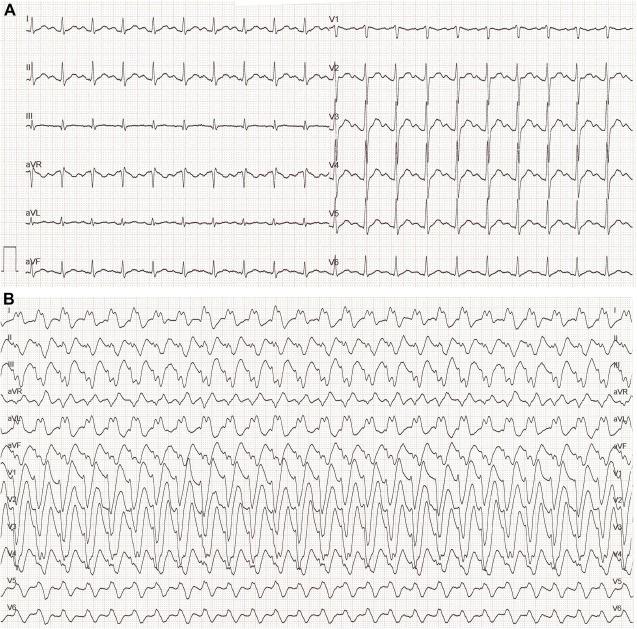
- QRS prolongation (>120 ms) — sodium channel blockade; treat with sodium bicarbonate [7]
- QT prolongation — potassium channel blockade; risk of torsade de pointes [2-3]
- Brugada-type coved ST elevation (V1–V3) — cocaine unmasks latent Brugada; dose-dependent [3][9]
- ST elevation/depression — ischemia from coronary vasospasm or thrombosis
- Wide-complex tachycardia — similar to class Ic antiarrhythmic toxicity [1-2]
- Terminal R wave in aVR — sodium channel blockade pattern [2]
- Ventricular ectopy, VT, VF — may occur with or without structural heart disease [3][11]
The following figure demonstrates the dramatic QRS widening seen with cocaine-induced sodium channel blockade:
Assessment
Severity spectrum: [3]
- Mild: Euphoria, tachycardia, mild hypertension (HR/BP 10–25% above baseline), mydriasis, diaphoresis
- Moderate: Significant agitation, chest pain, marked hypertension/tachycardia, hyperthermia <40°C
- Severe/life-threatening: Seizures, hyperthermia >40°C, QRS widening, ventricular arrhythmias, MI, aortic dissection, stroke, cardiac arrest
Atypical presentations: Body packers may present asymptomatic initially then rapidly deteriorate; late-stage toxicity may present with bradycardia and hypotension rather than the expected hyperadrenergic state [3]
- Acute coronary syndrome, aortic dissection
- Hemorrhagic and ischemic stroke
- Rhabdomyolysis → acute kidney injury
- Mesenteric ischemia, GI perforation
- Takotsubo cardiomyopathy
- Pulmonary hypertension (possibly levamisole-related) [3]
- Infective endocarditis (IV users)
Treatment Plan
Initial stabilization
- ABCs; continuous cardiac monitoring, pulse oximetry, core temperature
- IV access, supplemental O₂
Agitation/hyperadrenergic state
- Benzodiazepines first-line (midazolam 5–10 mg IM/IV, or diazepam 5–10 mg IV; repeat q5 min as needed) [2][8]
- Droperidol 5 mg IM/IV if benzodiazepines insufficient (faster onset) [2]
- Avoid prolonged physical restraints — exacerbate hyperthermia and rhabdomyolysis [2]
Hyperthermia >40°C
- Immediate ice water immersion or evaporative cooling (mist + fan); cooling blankets and cold packs are inferior [1-2]
- Target cooling rate >0.15°C/min associated with improved survival [2]
- Benzodiazepines to reduce heat-generating muscle activity
Chest pain/ischemia
- Benzodiazepines + nitroglycerin SL/IV [1][7]
- Aspirin 325 mg
- If refractory: phentolamine 5 mg IV or verapamil [1-2]
- PCI for STEMI; fibrinolytics if PCI unavailable [6]
QRS widening
- Sodium bicarbonate 1–2 mEq/kg (2 ampoules) IV bolus; may repeat [7-8]
- If refractory: 3% hypertonic saline 200 mL, or lidocaine 1–1.5 mg/kg IV [1]
- If still refractory or cardiac arrest: consider 20% lipid emulsion 1 mL/kg bolus [7]
Seizures
- Benzodiazepines first-line; phenobarbital or propofol second-line [8]
- Avoid phenytoin (sodium channel blocker — may worsen toxicity)
Hypertensive emergency
- Short-acting agents: phentolamine, nicardipine, sodium nitroprusside [7]
- Avoid long-acting antihypertensives [7]
Cardiac arrest
- Standard ACLS + sodium bicarbonate for wide-complex rhythms [1-2]
- Lidocaine for VT/VF [1]
- Consider VA-ECMO for refractory cardiogenic shock [2]
Body packing
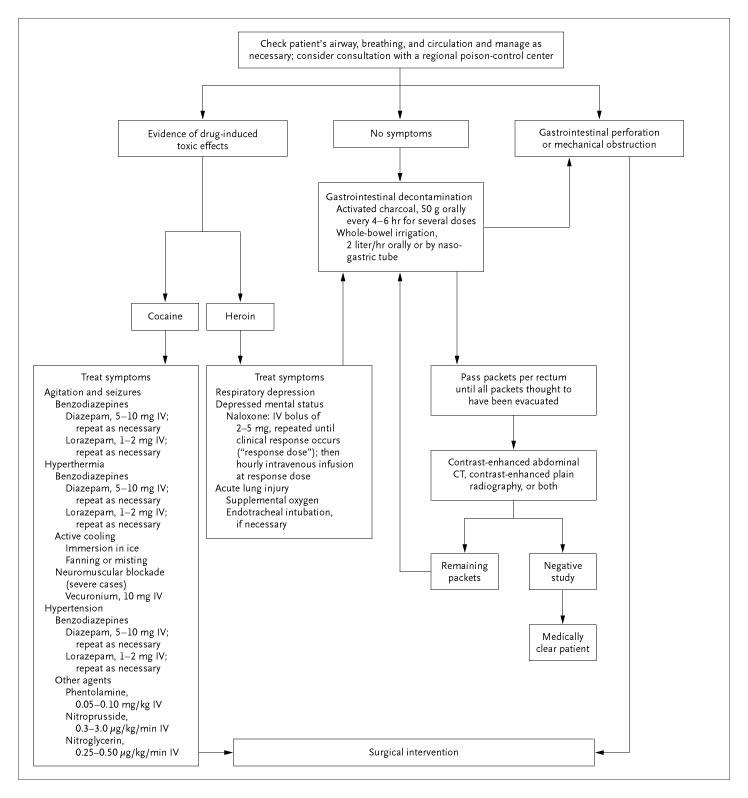
- Asymptomatic: whole bowel irrigation with polyethylene glycol; serial abdominal imaging until all packets passed [18-19]
- Symptomatic (packet rupture): immediate surgical removal — no drug sufficiently antagonizes lethal cocaine effects [19]
Disposition
Admit/ICU criteria
- Hyperthermia >40°C
- QRS or QT prolongation
- Ventricular arrhythmias
- Acute coronary syndrome / troponin elevation
- Seizures
- Hemodynamic instability
- Rhabdomyolysis with AKI
- Body packing with any symptoms
- Aortic dissection or stroke
Observation (6–12 hours)
- Cocaine-associated chest pain with negative serial troponins and normal/unchanged ECGs
- Mild-moderate agitation that resolves with benzodiazepines
- Asymptomatic body packers (until all packets passed and confirmed by imaging)
Discharge criteria
- Symptom resolution, normal vital signs for ≥1 hour off treatment
- Normal or baseline ECG
- Negative serial troponins (if chest pain was the presenting complaint)
- No ongoing agitation, seizures, or hyperthermia
- Able to ambulate and tolerate PO
Specialist consultation triggers
- Cardiology: STEMI, refractory arrhythmias, cardiogenic shock
- Medical toxicology: Refractory toxicity, body packing, uncertain diagnosis [7-8]
- Surgery: Body packing with obstruction or packet rupture [19]
- Neurology/neurosurgery: Stroke, status epilepticus
Follow Up / Return Precautions
Follow-up timing
- PCP or cardiology within 1–2 weeks if discharged after chest pain evaluation
- Addiction medicine/psychiatry referral at discharge — critical for long-term outcomes
- Repeat CBC in 1–2 weeks if levamisole-related neutropenia suspected [7]
Return precautions (counsel patient)
- Return immediately for: chest pain, palpitations, shortness of breath, headache, weakness/numbness, seizures, fever, dark urine, abdominal pain
- Cocaine effects may recur if co-ingested with alcohol (cocaethylene has longer half-life)
- Educate on fentanyl contamination risk in current drug supply
Expected recovery
- Uncomplicated cocaine toxicity typically resolves within 4–6 hours
- Cocaethylene effects may persist longer with alcohol co-ingestion
- Chronic users: LV hypertrophy and accelerated atherosclerosis persist and require long-term cardiovascular follow-up [3][12]
References
1. 2023 American Heart Association Focused Update on the Management of Patients With Cardiac Arrest or Life-Threatening Toxicity Due to Poisoning: An Update to the American Heart Association Guidelines for Cardiopulmonary Resuscitation and Emergency Cardiovascular Care. — Lavonas EJ, Akpunonu PD, Arens AM, et al. Circulation. 2023.
2. Part 10: Adult and Pediatric Special Circumstances of Resuscitation: 2025 American Heart Association Guidelines for Cardiopulmonary Resuscitation and Emergency Cardiovascular Care. — Cao D, Arens AM, Chow SL, et al. Circulation. 2025.
3. The Cardiovascular Effects of Cocaine. — Havakuk O, Rezkalla SH, Kloner RA. Journal of the American College of Cardiology. 2017.
4. Cocaine: An Updated Overview on Chemistry, Detection, Biokinetics, and Pharmacotoxicological Aspects Including Abuse Pattern. — Roque Bravo R, Faria AC, Brito-da-Costa AM, et al. Toxins. 2022.
5. 2021 AHA/ACC/ASE/CHEST/SAEM/SCCT/SCMR Guideline for the Evaluation and Diagnosis of Chest Pain: A Report of the American College of Cardiology/American Heart Association Joint Committee on Clinical Practice Guidelines. — Gulati M, Levy PD, Mukherjee D, et al. Journal of the American College of Cardiology. 2021.
6. Acute Cardiovascular Toxicity of Cocaine. — Lucyk SN. The Canadian Journal of Cardiology. 2022.
7. Management of Stimulant Use Disorder. — Steven Batki MD, Daniel Ciccarone MD MPH, Scott E. Hadland MD MPH, et al American Academy of Addiction Psychiatry (2023). 2023.
8. The ASAM/AAAP Clinical Practice Guideline on the Management of Stimulant Use Disorder. — Journal of Addiction Medicine. 2024.
9. A Tale of 2 Diseases: The History of Long-Qt Syndrome and Brugada Syndrome. — Havakuk O, Viskin S. Journal of the American College of Cardiology. 2016.
10. Body Packers and Body Stuffers: Cocaine Intoxications Reported to French Poison Centers (January 1, 2020-December 31, 2024). — von Fabeck K, Glaizal M, Simon N. Clinical Toxicology. 2025.
11. Cardiovascular Complications of Cocaine Use. — Lange RA, Hillis LD. The New England Journal of Medicine. 2001.
12. Side Effects of Cocaine Abuse: Multiorgan Toxicity and Pathological Consequences. — Riezzo I, Fiore C, De Carlo D, et al. Current Medicinal Chemistry. 2012.
13. Cocaine Intoxication. — Zimmerman JL. Critical Care Clinics. 2012.
14. Progress in Psychiatry. — Michels R, Marzuk PM. The New England Journal of Medicine. 1993.
15. The Cocaine 'Body Packer' Syndrome. Diagnosis and Treatment. — McCarron MM, Wood JD. The Journal of the American Medical Association. 1983.
16. Emergency Department Management of Body Packers and Body Stuffers. — Heymann-Maier L, Trueb L, Schmidt S, et al. Swiss Medical Weekly. 2017.
17. Cocaine-Induced Na+ Channel Blocking Effect. — Dehout C, Werion A, Grimaldi D. JACC. Clinical Electrophysiology. 2023.
18. Clinical Management of Cocaine Body Packers: The Hillingdon Experience. — Beckley I, Ansari NA, Khwaja HA, Mohsen Y. Canadian Journal of Surgery. Journal Canadien De Chirurgie. 2009.
19. Body Packing — The Internal Concealment of Illicit Drugs. — Traub SJ, Hoffman RS, Nelson LS. The New England Journal of Medicine. 2003.
Figures
More from Deep Dive
Reviewed by Dr. Lucas Mastropaolo. SymptomDx is an educational tool for medical professionals — it does not replace clinical judgment. Verify all clinical data and drug dosages with authoritative sources.